
Sewer Problems We Repair
A camera inspection shows exactly which of these problems your line has:
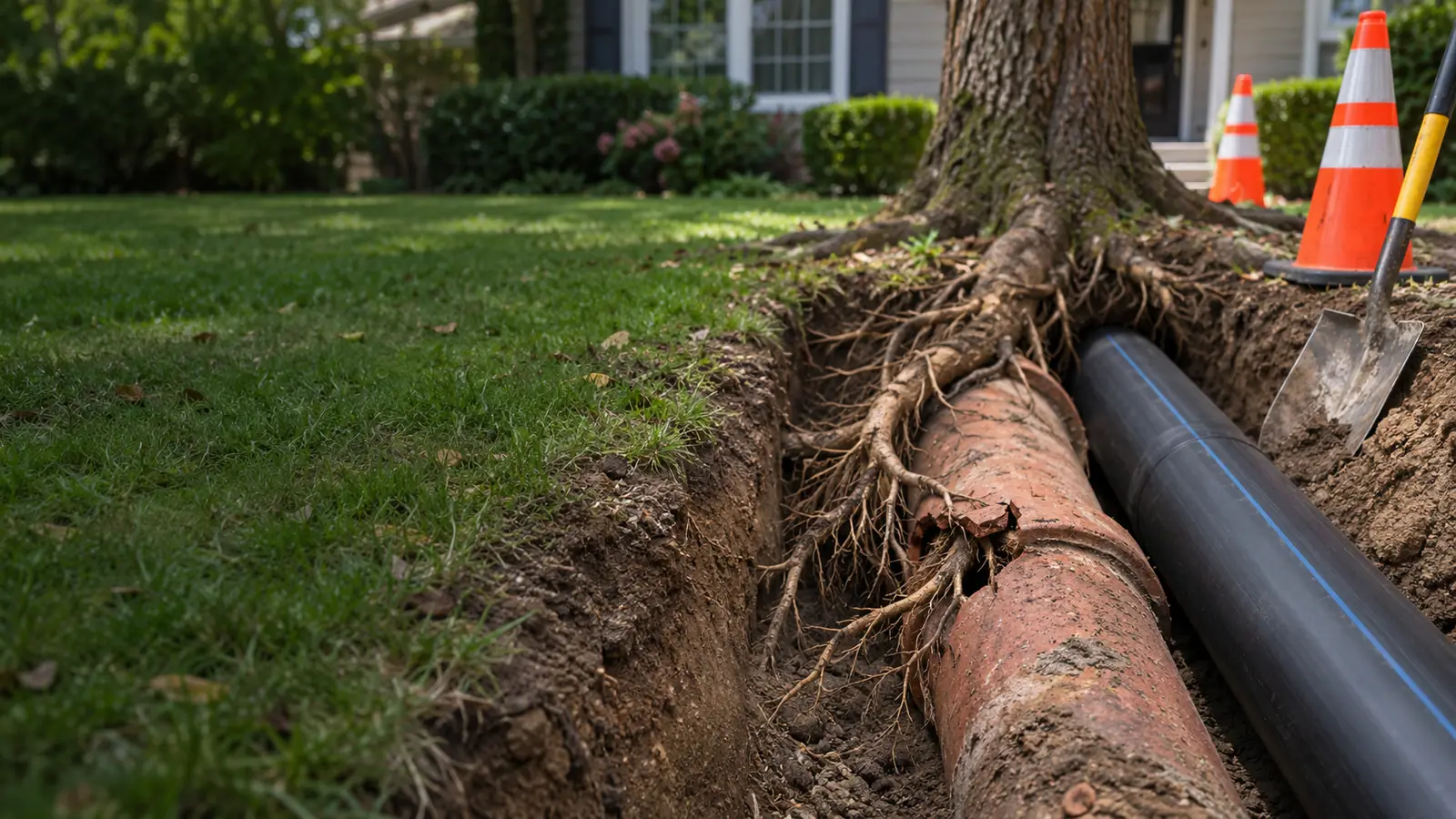
- Root intrusion through clay pipe joints
- Cracked or collapsed pipe from age or ground movement
- Bellies (sagging sections) that hold water and waste
- Offset joints that catch paper and debris
- Corroded cast-iron drain lines under the house
- Missing or broken cleanouts
Signs of a Broken Sewer Line
Call for a sewer inspection if you notice:
- Several drains backing up at the same time
- Sewage smell in the yard or near the foundation
- Soggy, green patches of lawn over the sewer path
- Repeated main-line clogs every few months
- Rodents or insects entering through drains
Trenchless vs Traditional Sewer Replacement
| Method | What it involves | Yard disruption |
|---|---|---|
| Spot repair | Dig at one damaged section | One small pit |
| Pipe lining (CIPP) | Cure a resin liner inside the old pipe | Access at cleanouts only |
| Pipe bursting | Pull new HDPE pipe through, breaking the old pipe outward | Two access pits |
| Open trench | Dig and replace the full length | Full trench |
Trenchless methods protect driveways, mature trees and landscaping. Not every line qualifies; a collapsed or badly sagging pipe may need excavation.
Why Granada Hills Sewer Lines Fail
Homes built in the 1950s and 1960s commonly have vitrified clay sewer laterals with joints every few feet. Roots enter those joints, and decades of ground movement shift them out of line. The repeat clogs these lines cause are usually cleared with hydro jetting first, then repaired for good.
Who Is Responsible for the Sewer Line?
In the City of Los Angeles, the property owner is responsible for the sewer lateral from the house to the connection at the public sewer main. Street work requires city permits, which we handle as part of the job.
Sewer Pipe Materials in Older Granada Hills Homes
The material of your sewer lateral predicts the problems it develops. A camera inspection identifies it.
| Material | Where we find it | Common problems |
|---|---|---|
| Vitrified clay | Many 1950s–60s laterals | Root intrusion at joints, cracks, offsets |
| Cast iron | Drains under the house and slab | Internal corrosion, scale, cracks |
| Orangeburg (fiber pipe) | Some mid-century homes | Deforms and collapses with age |
| ABS or PVC plastic | Newer homes and past repairs | Few problems if installed correctly |
| HDPE | Trenchless replacements | Long-lasting, joint-free runs |
What Affects the Cost of Sewer Line Repair?
The cost of sewer line repair depends on the size and location of the problem. These factors make the biggest difference:
- Repair method: a spot repair costs less than full replacement
- Length and depth of the pipe that needs work
- Access: driveways, patios, trees and structures above the line
- Location: work in the street or sidewalk requires city permits and traffic control
- Cleanout: whether a new cleanout must be installed
- Restoration: concrete, landscaping or flooring to replace
We give you a written price for each option after the camera inspection. City of Los Angeles property owners may qualify for a LA Sanitation sewer lateral repair rebate while funds last; see our sewer camera inspection page for details.
Why Every Home Needs a Sewer Cleanout
A sewer cleanout is a capped access pipe that lets a plumber reach the main line without pulling a toilet. Many older Granada Hills homes have no outdoor cleanout. Installing one near the foundation makes future drain cleaning faster and less expensive, and it gives a sewage backup a place to overflow outside instead of into the house.
How to Protect Your Sewer Line
- Plant trees away from the sewer path. Ficus, pine and other thirsty trees send roots toward pipe joints.
- Keep grease and wipes out of drains; they catch on roots and joints.
- Schedule a camera inspection before buying a home or after repeated clogs.
- Clean root-prone lines regularly until the pipe is repaired.
Our Trenchless Sewer Replacement Process
Trenchless replacement installs a new sewer line through the old one, so the yard stays mostly intact. A typical pipe bursting job follows these steps:
- Inspect the line with a camera and measure its length and depth.
- Pull the permit and call DigAlert (811) to mark buried utilities.
- Dig a small access pit at each end of the line.
- Pull a bursting head and new HDPE pipe through the old pipe, breaking it outward.
- Connect the new pipe at the house and at the sewer connection.
- Run a final camera inspection, pass the city inspection and backfill the pits.
What to Do During a Sewage Backup
A sewage backup needs fast action because wastewater carries bacteria. Take these steps while you wait for a plumber:
- Stop using every sink, shower, toilet, dishwasher and washing machine.
- Keep children and pets away from the affected area.
- Open the outdoor cleanout cap, if you have one and can do it safely, so sewage overflows outside instead of inside.
- Turn off power to outlets near standing water.
- Photograph the damage for your insurance claim.
Call our emergency plumbers for any backup that reaches the living space.
Our Sewer Line Repair Process
- Camera inspection with video
- Locate depth and pipe path
- Quote repair and replacement options
- Pull permits and complete the repair
- Final camera check to confirm
Related Plumbing Services
- Sewer Camera InspectionVideo inspection of sewer lines for home buyers, repeat clogs and repair planning.
- Hydro JettingHigh-pressure water cleaning that removes grease, scale and roots from pipe walls.
- Drain CleaningKitchen, bathroom, laundry and main-line clogs cleared and camera-checked.
Helpful Guides
- Galvanized Pipes in 1950s–60s Homes: When to Repipe
- Sewer Line Replacement Cost and Trenchless Options
- Signs of a Broken Sewer Line in an Older Home
Sewer Line Repair FAQs
How long does trenchless sewer replacement take?
Most residential trenchless jobs are completed in 1 to 2 days, compared with several days for open-trench replacement.
How long does a new sewer line last?
HDPE and PVC sewer pipe and quality liners are rated for decades of service, far longer than the clay pipe they replace.
Will you show me the problem?
Yes. We share the camera video so you see the roots, cracks or sagging before you decide.
Can tree roots be stopped permanently?
Yes, by repairing the pipe. Lining or replacing the damaged section removes the joints roots grow through.
Does homeowners insurance cover sewer line repair?
It depends on the policy. Standard policies often exclude worn or root-damaged sewer lines, but many insurers sell a service line endorsement that covers them.
How long does a sewer camera inspection take before a repair?
About one hour for most homes. You get the video and our repair options the same day.
Will trenchless sewer repair damage my driveway?
No, in most cases. Trenchless work needs only small access pits at the ends of the line, so driveways, patios and trees above the pipe stay in place.
Do I need a permit for sewer line repair?
Yes. Sewer repair and replacement require a permit and inspection, and work in the street requires additional city permits. We handle them.