
What Our Leak Detection Service Includes
Every leak detection visit follows the same steps:
- Meter test to confirm water is leaving the system
- Pressure test of hot and cold lines to isolate the leaking side
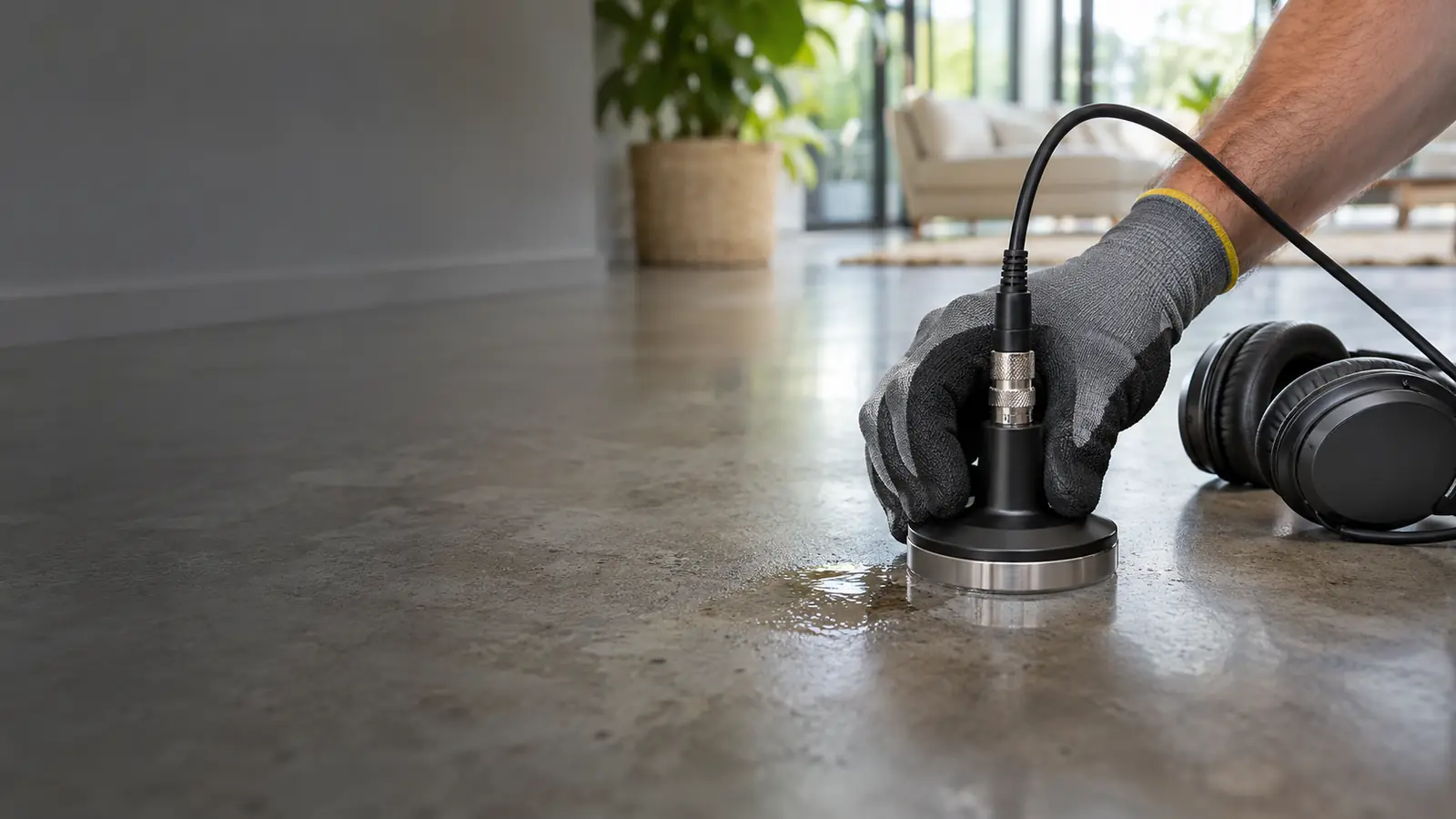
- Acoustic listening to hear water escaping under concrete
- Thermal imaging to trace hot water leaks and wet areas
- Pinpoint marking of the leak on the floor or wall
- Repair options with prices: spot repair, reroute or repipe
Signs of a Hidden Water Leak
Call for leak detection when you notice:
- A water bill that jumps without a change in use
- The sound of running water when every tap is off
- Warm spots on the floor (a hot water slab leak)
- Damp carpet, warped flooring or cracked tile
- Mold or musty smell along baseboards
- Low water pressure throughout the house
Why Slab Leaks Are Common in Granada Hills
Most Granada Hills homes sit on concrete slab foundations with copper water lines running underneath. Over decades, hard water, soil movement and pipe rubbing against concrete wear pinholes in the copper. Ground movement from earthquakes, including the 1994 Northridge earthquake that deformed ground in Granada Hills, added stress to many lines. Learn the warning signs of a slab leak.
Slab Leak Repair Options
| Option | How it works | Best when |
|---|---|---|
| Spot repair | Open the slab at the leak and replace the damaged section | One leak on newer pipe |
| Reroute | Abandon the under-slab line and run new pipe through walls or attic | Older copper with risk of more leaks |
| Whole-house repipe | Replace all supply lines | Repeated leaks or galvanized pipe |
When leaks keep returning, a whole-house repipe is usually the lasting fix.
Does Insurance Pay for Slab Leak Repair?
It depends on your policy. Many homeowners policies pay for access (breaking and restoring the floor) and water damage, but not the pipe repair itself. We document the leak location with photos and readings for your claim.
How Much Water Does a Hidden Leak Waste?
A hidden leak wastes water every hour of every day, because supply lines are always under pressure. The U.S. Environmental Protection Agency's WaterSense program estimates that household leaks waste nearly 10,000 gallons of water per home each year. A slab leak on the hot water line wastes gas or electricity too, because the water heater keeps reheating the water that escapes.
Types of Leaks We Locate
We find leaks anywhere in a home's water system, not only under the slab:
- Slab leaks in hot or cold copper lines under concrete floors
- Wall and ceiling leaks from supply lines, drain lines and shower valves
- Main water line leaks between the LADWP meter and the house
- Drain line leaks under the slab, found by testing and camera inspection
- Irrigation and outdoor line leaks that keep soil wet
- Fixture leaks from toilets, faucets and appliance connections
Leak Detection Equipment We Use
Professional leak detection relies on several tools, each suited to a different kind of leak:
| Tool | What it finds |
|---|---|
| Pressure gauge | Whether a line holds pressure, and which side (hot or cold) leaks |
| Acoustic ground microphone | The sound of water escaping under concrete or soil |
| Thermal imaging camera | Warm water spreading under floors and inside walls |
| Moisture meter | Wet drywall, wood and flooring |
| Pipe and cable locator | The path of buried pipes |
| Sewer camera | Cracks and separated joints in drain lines |
Hot Water Leaks vs Cold Water Leaks
A hot water slab leak is usually found sooner than a cold one, because it warms the floor and raises energy bills. Pets often lie on the warm spot. A cold water leak gives fewer clues and can run for months, showing up as a higher water bill, damp flooring or a meter that moves with every tap off. The pressure test at the start of our visit tells us which line is leaking, which narrows the search before we listen for it.
How to Prevent Future Leaks
Most leaks come from pipe wear that you can slow down:
- Check your water pressure. The California Plumbing Code requires a pressure regulator when static water pressure exceeds 80 psi. A failed pressure regulator lets higher street pressure strain every pipe and fixture.
- Treat hard water. A softener reduces scale and helps protect pipes and fixtures.
- Replace rubber supply hoses on washing machines with braided stainless steel hoses.
- Watch your water bill for an unexplained rise.
- Repipe after repeated leaks. Two or more slab leaks often mean the rest of the copper is worn too.
Signs of a Main Water Line Leak in the Yard
The main water line runs underground from the LADWP meter to your house, so its leaks show up outdoors first. Watch for these signs:
- A patch of lawn that stays green, soggy or sunken in dry weather
- Water bubbling up through cracks in the driveway or walkway
- Water standing in the meter box
- The meter's leak indicator turning with the house valve closed
- A sudden drop in water pressure at every fixture
We locate the leak along the buried line and repair the damaged section, or replace the full line with new copper or PEX when it is old galvanized pipe.
Our Leak Detection & Slab Leaks Process
- Confirm the leak at the meter
- Isolate hot or cold side
- Pinpoint with acoustic and thermal tools
- Review repair options and prices
- Repair, pressure-test and restore
Related Plumbing Services
- Whole-House RepipingOld galvanized and leaking copper replaced with new PEX or copper supply lines.
- Emergency PlumbingBurst pipes, overflowing toilets, sewage backups and no-hot-water calls, any hour.
- Water Heater Repair & ReplacementTank water heaters repaired, replaced, strapped and permitted to California code.
Helpful Guides
- Slab Leak Signs: 7 Warnings Under Your Granada Hills Floor
- Galvanized Pipes in 1950s–60s Homes: When to Repipe
- Slab Leak Repair Cost in Los Angeles: Reroute vs Spot Repair
Leak Detection & Slab Leaks FAQs
How accurate is electronic leak detection?
Acoustic and thermal equipment usually locates a slab leak within a small area, so the repair opening stays small.
Can I keep using water with a slab leak?
Yes, for a short time, but the leak wastes water, can damage the foundation and floors, and a hot water leak raises gas bills. Book detection soon.
How long does slab leak repair take?
A spot repair or reroute usually takes one day. A whole-house repipe takes 2 to 5 days depending on the home.
Will you have to break my floor to find a leak?
No. We find the leak with pressure, acoustic and thermal tools first. Concrete is opened only for a spot repair, and only at the marked location.
Do you repair main water line leaks in the yard?
Yes. We repair and replace the line between the LADWP meter and the house, often with minimal digging.