
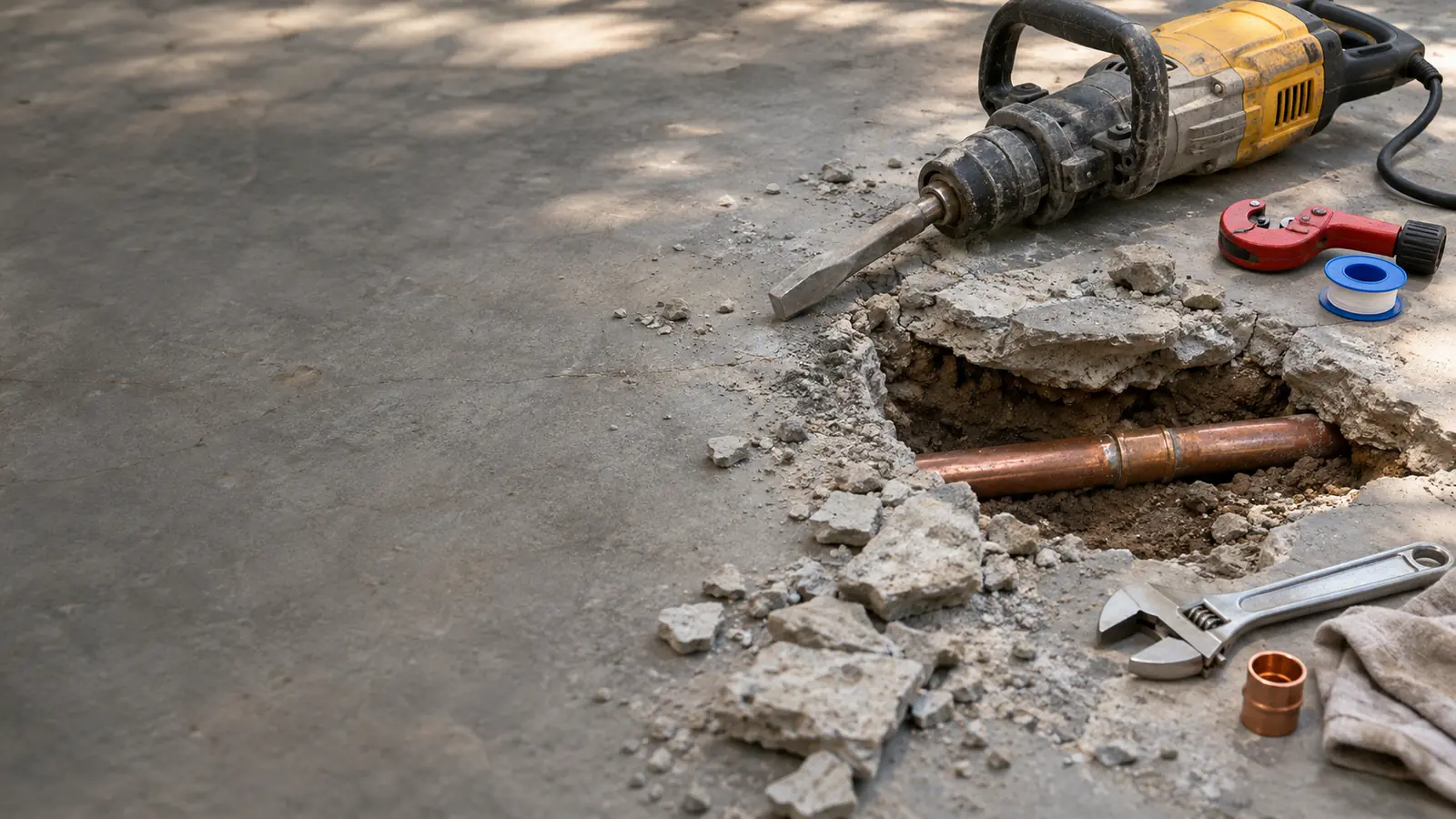
Slab leak repair commonly costs $2,000 to $7,500 nationally. A spot repair often runs $500 to $4,000 and a reroute $1,500 to $5,000 or more, with Los Angeles prices often higher.
What Does Slab Leak Repair Cost?
Slab leak repair cost depends on how the leak is reached and fixed. National cost data from Modernize puts most slab leak repairs between $2,000 and $7,500, with these typical ranges by method:
| Repair method | Typical national cost | Best for |
|---|---|---|
| Spot repair through the slab | $500–$4,000 | One accessible leak in otherwise sound pipe |
| Reroute or partial repipe | $1,500–$5,000+ | Older pipe, repeat leaks or hard-to-reach lines |
| Whole-house repipe | See our repiping cost guide | Two or more leaks or failing supply pipe |
National averages are a starting point. Los Angeles projects often cost more than the national figures because of higher labor rates, city permit fees and the age of local homes. A written quote after an inspection is the only reliable number for your home.
The Four Parts of a Slab Leak Bill
A slab leak quote usually combines four separate costs. Asking for each one makes quotes easier to compare:
- Detection: pressure testing and electronic location of the leak.
- Access: cutting flooring and concrete, or none at all for a reroute.
- Repair: replacing the damaged pipe section or running a new line.
- Restoration: patching concrete, flooring, drywall and paint.
Flooring is often the surprise. Breaking through tile or hardwood to reach a leak means replacing finishes that may be hard to match, which is one reason rerouting can cost less overall.
What Makes Slab Leak Repair Cost More?
- Hot water lines: often run longer distances under the slab
- Expensive flooring above the leak, such as tile, stone or hardwood
- Leak depth and location under walls, cabinets or the foundation edge
- Pipe condition: brittle old copper can force a longer repair
- Two-story homes where a reroute must travel farther
- Water damage that needs drying and mold work
Spot Repair vs Reroute: Which Costs Less Over Time?
A spot repair costs less on the day, but it fixes only one point on a pipe that is the same age everywhere. If the home has already had one slab leak, the lines beside it have lived through the same water, pressure and ground movement. A reroute abandons the under-slab line and runs new pipe through walls or the attic, so the next problem, if any, appears where it is easy to see and reach.
For a first leak in a newer home, a spot repair is usually the sensible choice. For a second leak, or for a 1950s or 1960s Granada Hills home with original copper, rerouting or repiping is usually the better value. Our guide to slab leak signs explains how to catch leaks early.
Does Insurance Pay for Slab Leak Repair?
It depends on the policy. Many homeowners policies pay to access the leak and to repair sudden water damage, but not to repair or replace the pipe itself. Damage from a slow leak that went unaddressed is often excluded. Before demolition starts:
- Call your insurer and open a claim
- Photograph the floor, the damage and the leak location
- Keep the plumber's leak detection report and invoice
How to Get an Accurate Slab Leak Quote
- Ask for leak detection first, so the quote is based on the exact leak location.
- Ask for spot repair and reroute prices side by side.
- Confirm whether concrete, flooring and drywall restoration are included.
- Ask whether the price includes the permit.
- Ask what warranty covers the repair.
How Long Does Slab Leak Repair Take?
| Stage | Typical time |
|---|---|
| Leak detection | 1 to 3 hours |
| Spot repair through the slab | About one day, plus concrete curing |
| Reroute through walls or attic | One to two days |
| Whole-house repipe | 2 to 5 days |
| Flooring and drywall restoration | Varies by finish |
Questions to Ask Before Approving a Repair
- Is the leak on the hot or cold line, and how was it confirmed?
- What condition is the rest of the pipe in?
- Can the line be rerouted instead of opening the floor?
- Who restores the concrete and flooring, and is it included?
- Will the repair be pressure-tested before the floor is closed?
Why Slab Leaks Cost More in Older Granada Hills Homes
Many Granada Hills homes were built in the 1950s and 1960s on concrete slabs with copper water lines buried beneath them. After six or seven decades of hard water, pressure changes and ground movement, that copper is thin in more than one place. A plumber who opens the floor for one leak often finds more corrosion nearby, and the next leak tends to appear within a few years. Those homes often have tile, terrazzo or hardwood flooring that is costly to cut and patch. Together, these facts push many local owners toward a reroute, which avoids the slab, rather than a series of spot repairs. When you compare quotes, weigh the cost of the first repair against the likelihood of paying for a second and third.
How to Budget for a Slab Leak
Set aside money for three things, not one: detection and the repair itself, restoration of floors and walls, and water damage cleanup if the leak ran for a while. If you have homeowners insurance, call before work starts, since access and resulting damage may be covered even when the pipe repair is not. Keep receipts, photos and the plumber's written leak report together for the claim.
When to Call a Plumber
If this guide matches what you see at home, our licensed plumbers can inspect it and give you a written price. Call (747) 285-3582 to book a plumbing inspection.
Related Questions
Is slab leak detection included in the repair price?
It varies by company. Many plumbers charge for detection separately and some credit it toward the repair. Ask before booking.
Is a reroute always more expensive than a spot repair?
No. When a spot repair means breaking expensive flooring, a reroute through walls or the attic can cost less overall.
Can I wait to repair a slab leak?
No. A slab leak keeps wasting water and can damage floors and the foundation. A hot water leak raises gas bills too.
Does a reroute leave the old pipe under the slab?
Yes. The old line is cut and capped, so it no longer carries water.