
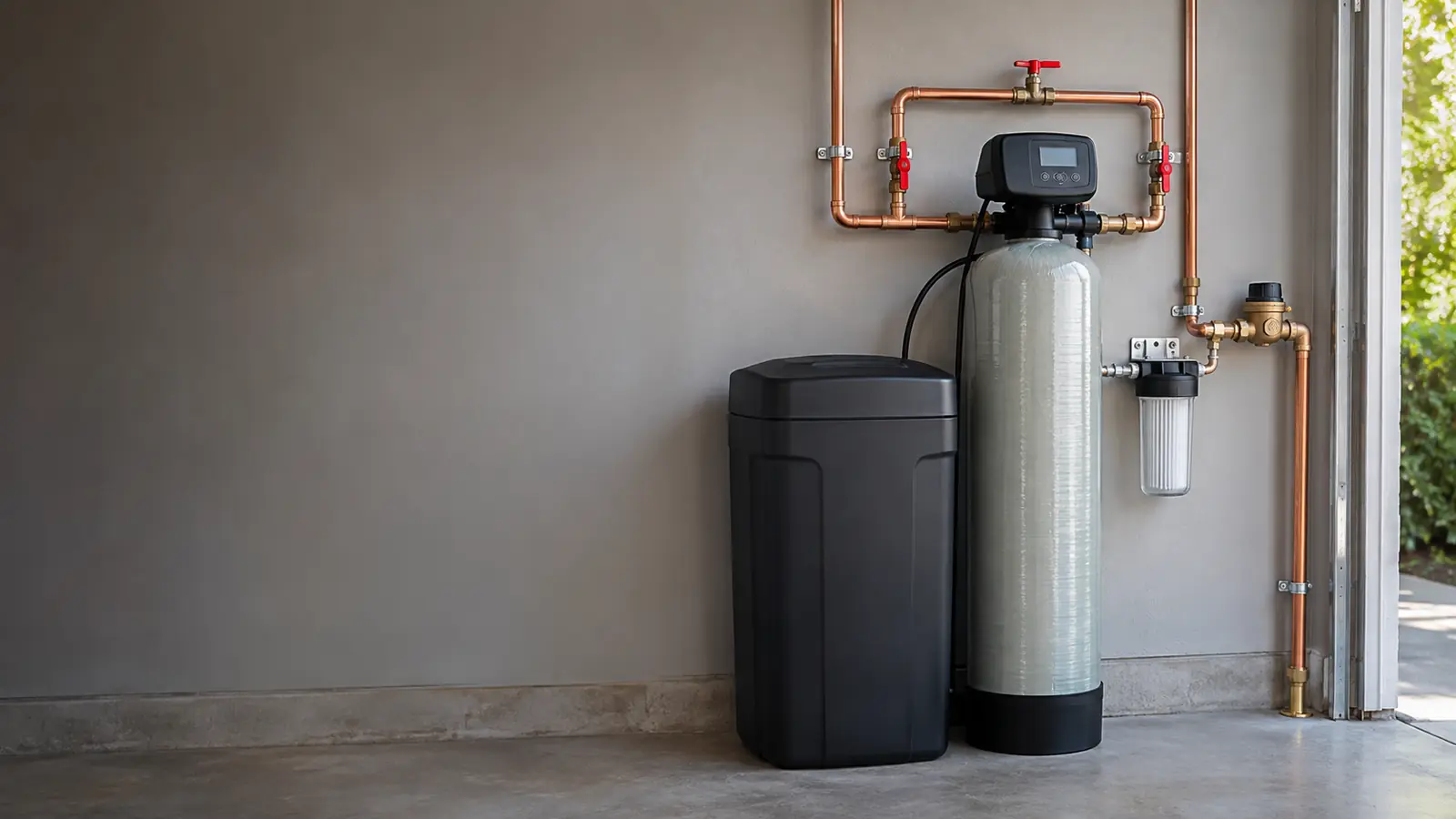
Water Treatment Systems We Install
We help you choose between:
- Salt-based water softeners that remove hardness minerals
- Salt-free scale conditioners that reduce scale without salt
- Whole-house carbon filters that reduce chlorine and chloramine taste
- Under-sink reverse osmosis for drinking water
- Loop installation and bypass valves
Signs of Hard Water in Your Home
Hard water shows up as:
- White crust on faucets and shower heads
- Spots on glasses and dishes
- Popping sounds from the water heater
- Soap that does not lather well
- Dry skin and dull hair after showers
How Hard Is Granada Hills Water?
LADWP water in the San Fernando Valley measures roughly 6.0 to 8.2 grains per gallon, a range classed as moderately hard to hard. Many treatment specialists recommend a softener above about 7 grains per gallon. Read more in our guide to hard water in the San Fernando Valley.
Softener vs Salt-Free Conditioner
| Factor | Salt softener | Salt-free conditioner |
|---|---|---|
| Removes hardness | Yes | No (changes how minerals behave) |
| Feels soft | Yes | Little change |
| Salt and drain needed | Yes | No |
| Scale protection | High | Moderate |
How Does a Water Softener Work?
A water softener removes hardness through ion exchange. Water passes through a tank of resin beads that hold sodium or potassium ions. Calcium and magnesium stick to the beads and sodium or potassium is released in their place. When the beads are full, the softener regenerates: it rinses them with brine from the salt tank and sends the minerals down the drain.
How to Size a Water Softener
A softener is sized by the grains of hardness it removes between regenerations. A simple estimate uses household size, daily water use and hardness:
- Multiply the number of people by about 75 gallons per person per day.
- Multiply that by your water hardness in grains per gallon.
- Multiply by 7 to get the hardness removed in a week.
For example, 4 people × 75 gallons × 8 grains = 2,400 grains a day, or 16,800 grains a week. A softener rated around 32,000 grains handles that with room to spare. We confirm the size after testing your water.
Where a Water Softener Is Installed
A whole-house softener is installed where the main water line enters the home, often in the garage or on an outside wall. It needs a drain for regeneration water and, for some models, an electrical outlet. We usually leave the outdoor hose bibs and irrigation on unsoftened water, since plants do not need softened water. Some Southern California communities restrict softeners that discharge salt to the sewer, so we confirm local rules before installing.
Water Softener and Filter Maintenance
- Check the salt level monthly and keep the tank at least one-third full.
- Break up salt bridges, hard crusts that form above the water and stop brine from forming.
- Clean the resin with a resin cleaner once or twice a year.
- Replace carbon and sediment filters on the schedule the manufacturer sets, often every 6 to 12 months.
- Replace a reverse osmosis membrane when water quality or flow drops.
Signs Your Water Softener Is Not Working
- White spots and scale return on fixtures and glass
- The salt level has not dropped in weeks
- A hard crust (salt bridge) has formed in the brine tank
- Water in the brine tank is much higher than normal
- The control panel shows an error or the wrong time
Most problems come from salt bridges, a clogged injector or a control setting. Older softeners may need new resin.
Reverse Osmosis Drinking Water Systems
A reverse osmosis (RO) system is installed under the kitchen sink and supplies a separate faucet. Water is pushed through a fine membrane that removes most dissolved minerals and many other substances, and prefilters reduce sediment and chlorine. RO water is a common choice for drinking, cooking and coffee in homes with softened water.
What Affects Water Treatment Cost?
- System type: softener, conditioner, carbon filter or reverse osmosis
- Capacity sized to household water use and hardness
- Plumbing loop: whether a softener loop and drain already exist
- Location: garage, exterior wall or under the sink
- Ongoing costs: salt, filters and membranes
Water Treatment for Tankless Water Heaters
Tankless water heaters are more sensitive to hard water than tank heaters because water passes through a narrow heat exchanger. Scale builds inside it, reduces the flow the unit can heat and can trigger error codes. Many tankless manufacturers recommend treating water above a set hardness level, and the warranty terms may depend on it. A softener or scale conditioner installed ahead of the heater protects it and stretches the time between descaling services. See our tankless water heater page for maintenance details.
Our Water Softeners & Filtration Process
- Test your water hardness
- Recommend a system and size
- Install with bypass valve
- Program and test
- Set a maintenance schedule
Related Plumbing Services
- Water Heater Repair & ReplacementTank water heaters repaired, replaced, strapped and permitted to California code.
- Tankless Water HeatersGas and electric tankless systems sized, installed and maintained.
- Toilet, Faucet & Fixture RepairRunning toilets, dripping faucets, garbage disposals and new fixture installs.
Helpful Guides
- Hard Water in the San Fernando Valley: Effects on Plumbing
- Do You Need a Water Softener in Granada Hills?
Water Softeners & Filtration FAQs
Do I need a water softener in Granada Hills?
It depends on your goals. If you want to protect a tankless heater or new fixtures, or you dislike scale and spots, a softener or scale system helps.
Will a softener make my water salty?
No, not noticeably. Softened water carries a small amount of sodium, and many homes keep one kitchen tap on unsoftened or reverse-osmosis water for drinking.
How often does a softener need salt?
Most households add salt every 1 to 2 months, depending on water use and hardness.
Can I use potassium instead of salt?
Yes. Potassium chloride works in most softeners and adds no sodium, though it costs more than salt.
Does a water softener remove chlorine taste?
No. A softener removes hardness. A carbon filter reduces chlorine and chloramine taste and odor.
Is softened water safe for plants?
Softened water adds sodium, which plants do not tolerate well over time. We leave hose bibs and irrigation on unsoftened water.
How long does a water softener last?
It depends on water use and maintenance. Many softeners last well over a decade with regular salt and resin care.
Can I install a softener if I rent?
Only with the owner's permission. Portable softeners that connect to a single fixture are an option for renters.
Does a softener need electricity?
Most salt-based softeners need a standard outlet for the control valve. Many salt-free conditioners need no power at all, so they suit outdoor or garage installs without an outlet.