
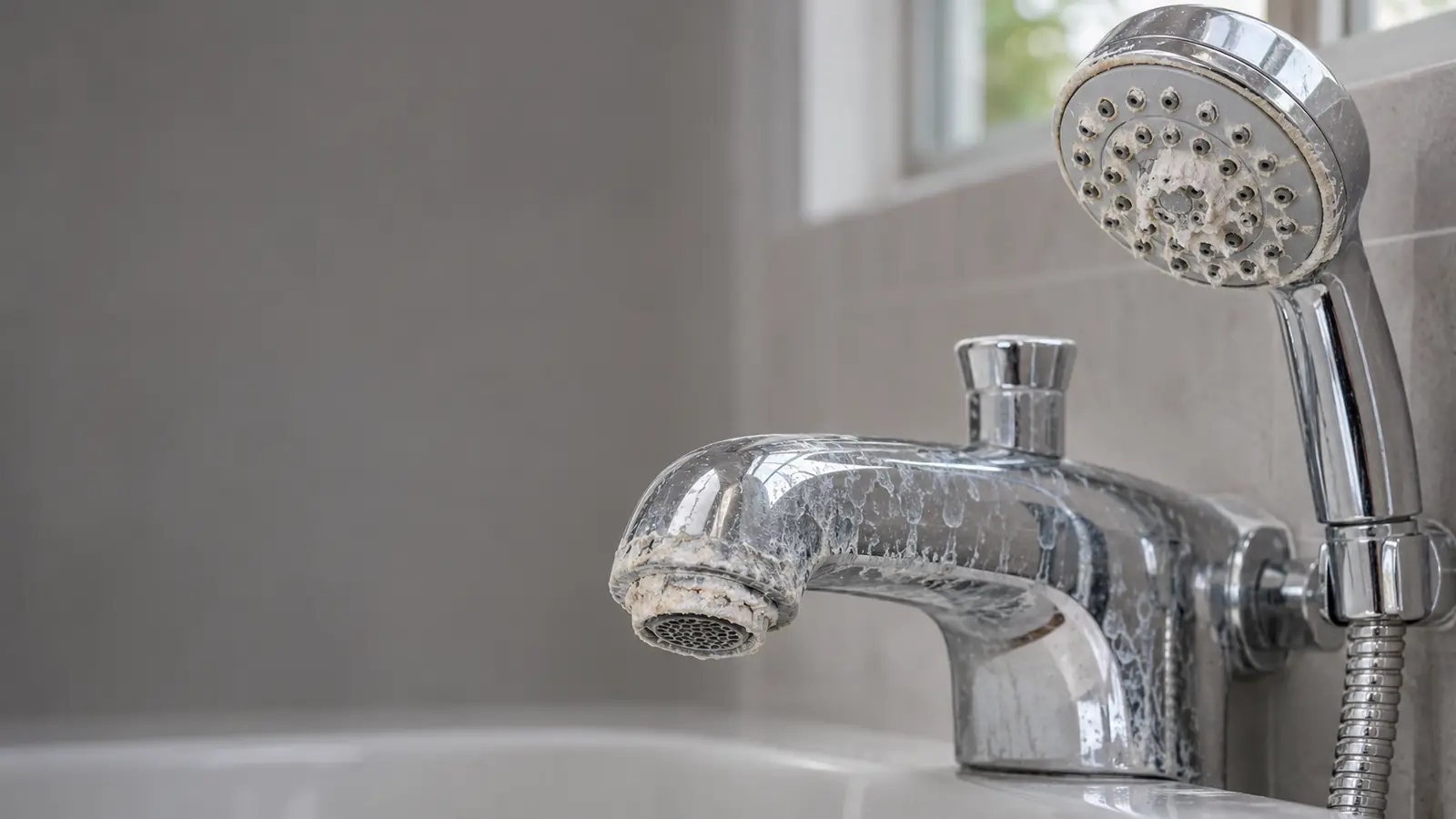
San Fernando Valley water from LADWP measures roughly 6.0 to 8.2 grains per gallon, which is moderately hard to hard. Hard water leaves scale in water heaters, tankless units, fixtures and pipes, shortening their life.
What Makes Water Hard?
Hard water contains dissolved calcium and magnesium. Water hardness is measured in grains per gallon (gpg) or milligrams per liter (mg/L); one grain per gallon equals 17.1 mg/L. Water above about 7 gpg is generally classed as hard.
How Hard Is Water in Granada Hills?
LADWP serves the San Fernando Valley with a blend of Los Angeles Aqueduct water, local groundwater and imported water. Valley hardness typically runs about 103 to 140 mg/L, or 6.0 to 8.2 gpg, and changes with the blend. LADWP publishes current figures in its annual drinking water quality report.
How Hard Water Damages Plumbing
| Part of the home | Effect of hard water |
|---|---|
| Tank water heater | Scale at the bottom, popping noise, shorter life |
| Tankless water heater | Scale in the heat exchanger, error codes, lower flow |
| Faucets and shower heads | Crusted aerators, drips, weak spray |
| Toilets | Worn flappers and fill valves, running toilets |
| Dishwashers and washers | Spots, film and shorter appliance life |
How to Protect Your Plumbing from Hard Water
- Flush tank water heaters once a year.
- Descale tankless water heaters once a year.
- Soak aerators and shower heads in vinegar every few months.
- Install a whole-house water softener or scale conditioner.
For a recommendation sized to your household, see water softener and filtration installation.
How to Test Your Water Hardness
You can check your water hardness three ways:
- Read the LADWP water quality report. It lists hardness in mg/L for each supply zone. Divide by 17.1 to get grains per gallon.
- Use a test strip. Dip it in a glass of cold tap water and compare the color to the chart.
- Ask for a water test during a plumbing visit. We test hardness before recommending any treatment.
Signs of Hard Water in Your Home
- White or chalky crust on faucets, shower heads and glass doors
- Spots and film on dishes after the dishwasher
- Popping or rumbling from the water heater
- Shower heads with uneven spray from clogged nozzles
- Toilets that run because scale stops the flapper from sealing
- Soap and shampoo that lather poorly
Softener vs Scale Conditioner vs Filter
| System | What it does | Best for |
|---|---|---|
| Salt-based softener | Removes calcium and magnesium | Maximum scale protection and soft-feeling water |
| Salt-free conditioner | Changes minerals so they stick less to surfaces | Scale reduction without salt or a drain |
| Carbon filter | Reduces chlorine and chloramine taste and odor | Better-tasting water; does not soften |
| Reverse osmosis | Removes most dissolved minerals at one tap | Drinking and cooking water |
How Hard Water Raises Water Heating Costs
Scale on the bottom of a tank water heater sits between the burner and the water. The burner has to run longer to heat the same amount of water, which raises gas use and stresses the tank. In tankless units, scale coats the heat exchanger and lowers the flow the unit can heat. Flushing tanks and descaling tankless units once a year limits both problems.
How to Remove Scale from Fixtures
- Unscrew the faucet aerator or shower head.
- Soak it in white vinegar for one to several hours.
- Scrub loosened scale with an old toothbrush.
- Rinse with water and reinstall.
For shower heads that cannot be removed, fill a plastic bag with vinegar, fasten it around the head and leave it for a few hours.
Hard Water and Household Appliances
Dishwashers, washing machines, coffee makers and ice makers all heat or hold water, so they collect scale. Use rinse aid in the dishwasher, run a descaling cycle on coffee makers as the manufacturer recommends, and clean washing machine inlet screens when fill time slows. A whole-house softener reduces scale in every appliance at once.
Hard Water and Chloramine Are Different Problems
Hardness comes from dissolved minerals and causes scale. Chloramine is the disinfectant LADWP uses to keep water safe in the pipes, and it affects taste and smell. A softener treats hardness but not chloramine, while a carbon filter treats chloramine but not hardness. Many homes use both.
Why Hardness Changes from Month to Month
LADWP blends water from different sources, and the blend changes with snowpack, imports and local groundwater use. A Valley home may see harder water in some months than others. That is why test results from a single day can differ from the annual report, and why softeners are sized with room to spare.
When to Call a Plumber
If this guide matches what you see at home, our licensed plumbers can inspect it and give you a written price. Call (747) 285-3582 to book a plumbing inspection.
Related Questions
Is hard water unsafe to drink?
No. Hardness is not a health concern and has no legal limit; it is a plumbing and appliance concern.
Why does my water taste like chlorine?
LADWP disinfects with chloramine. A carbon filter reduces the taste and smell.
Does boiling water remove hardness?
No, not fully. Boiling removes some hardness as scale in the pot but leaves the rest dissolved in the water.
Will a softener lower my water heater bills?
It can. Softened water prevents new scale in the tank, so the burner heats water more efficiently over the heater's life.
Is bottled water softer than tap water?
It varies by brand and source. The label or the bottler's water quality report lists the mineral content.
Does hard water damage PEX pipe?
No. PEX resists scale buildup, which is one reason it is a common choice for repiping in hard water areas.
Do I need a softener for a tankless water heater?
It depends on the manufacturer's guidance and your hardness. Many recommend treatment above a set level to protect the heat exchanger.