
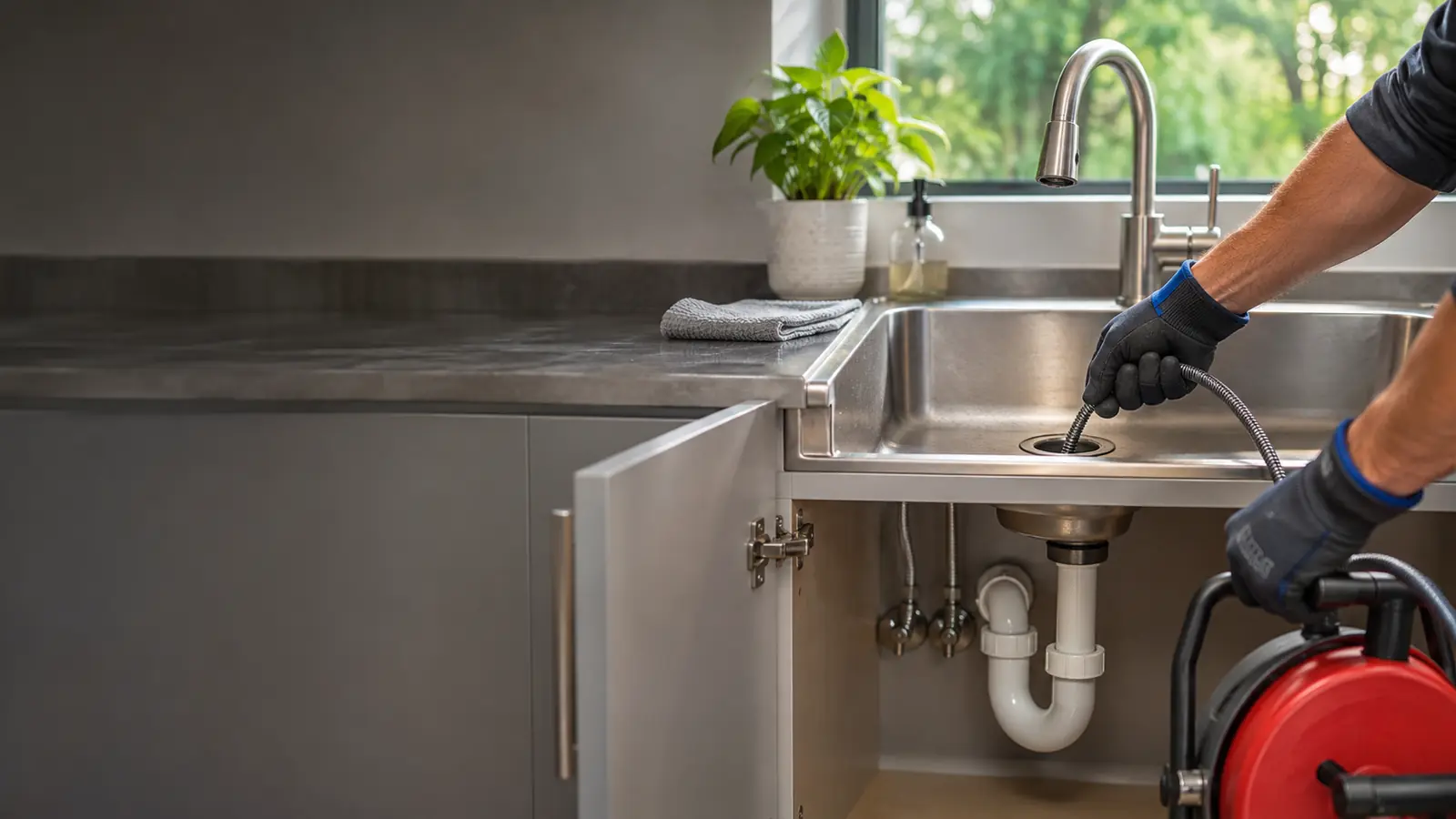
Which Drains Do We Clean?
We clean every drain in a home, from a single slow sink to the main line that runs to the street:
- Kitchen sink drains clogged with grease, food and coffee grounds
- Bathroom sinks, tubs and showers clogged with hair and soap scum
- Toilets that clog often or flush slowly
- Laundry and floor drains filled with lint and sediment
- Main sewer lines blocked by roots, grease or broken pipe
- Outdoor and area drains that flood patios in winter rain
Signs You Need Professional Drain Cleaning
A clog that keeps returning means the blockage is deeper than a plunger reaches. Call when you notice:
- Water draining slowly from more than one fixture
- Gurgling sounds from drains or toilets
- Sewage smell from floor drains or the yard
- Water backing up into the tub when the toilet flushes
- A clog that returns within weeks of clearing it
How We Clear Clogged Drains
We match the tool to the pipe and the blockage. A cable machine (drain snake) cuts through hair and paper clogs in branch lines. Grease, sludge and roots in the main line often need hydro jetting, which scours the pipe wall with high-pressure water.
When a main line clogs twice, we run a camera through it. The video shows roots, cracks, offsets or sagging sections that a cable cannot fix.
Why Drains Clog in Older Granada Hills Homes
Many Granada Hills homes were built in the 1950s and 1960s with cast-iron drains and clay sewer laterals. Cast iron corrodes on the inside and catches debris. Clay joints let roots from mature citrus, ficus and pine trees grow into the line. Both conditions cause repeat clogs that need a lasting repair, not just another snaking.
Are Chemical Drain Cleaners Safe for My Pipes?
No, we do not recommend them. Caustic drain cleaners heat up inside the pipe, soften old PVC joints and speed up corrosion in cast iron, and they rarely clear a main-line clog. An enzyme cleaner used monthly is a gentler choice for slow kitchen drains.
Kitchen, Bathroom and Main Line Clogs Compared
Each drain in a home clogs for a different reason, and the location of the clog decides the repair. This comparison shows what we find in each one.
| Drain | Common cause | Typical symptom | Usual fix |
|---|---|---|---|
| Kitchen sink | Grease, food scraps, coffee grounds | Slow drain, water in both basins | Cable machine; jetting for grease |
| Bathroom sink | Hair, soap, toothpaste | Slow drain, odor | Clean the trap and pop-up |
| Tub and shower | Hair and soap scum | Standing water during showers | Small cable through the drain |
| Toilet | Wipes, paper, objects | Weak flush, overflow | Closet auger; pull the toilet if needed |
| Laundry | Lint and detergent sludge | Standpipe overflow during drain cycle | Cable machine; lint trap |
| Main sewer line | Roots, grease, broken pipe | Several drains back up at once | Cable or jetting, then camera |
How to Tell If Your Main Sewer Line Is Clogged
A main line clog affects more than one fixture, while a branch clog affects one. Check these signs in order:
- Run water in a bathroom sink and watch the tub or shower drain in the same room. Rising water in the tub points to the main line.
- Flush a toilet and listen for gurgling in other drains.
- Check the lowest drain in the house, usually a shower or floor drain. Main line backups appear there first.
- Find the outdoor cleanout, a capped pipe near the foundation. Water standing in it confirms the clog is past the house.
If these signs appear, stop running water and call us. More water only pushes sewage back into the home.
How to Prevent Clogged Drains
Most clogs start with what goes down the drain. These habits prevent most of the calls we see:
- Keep grease out of sinks. Let cooking grease cool, wipe pans with a paper towel and put the grease in the trash. Grease cools, hardens and coats the pipe wall, catching food and paper until the drain closes.
- Never flush wipes. Wipes labeled flushable do not break down like toilet paper and collect on roots and pipe joints.
- Use strainers in kitchen sinks, tubs and showers to catch food and hair.
- Run cold water with the garbage disposal for several seconds after grinding.
- Clean pop-up stoppers in bathroom sinks every few months.
- Schedule main line cleaning every 12 to 24 months if a camera inspection found roots, until the pipe is repaired.
What Not to Put in a Garbage Disposal
A garbage disposal grinds soft food scraps, but some foods jam the blades or form a paste that clogs the drain line. Keep these out of the disposal:
- Fats, oils and grease
- Coffee grounds and eggshells
- Pasta, rice and bread, which swell with water
- Fibrous vegetables such as celery, artichokes and corn husks
- Potato peels
- Bones and fruit pits
Why Does My Drain Smell?
A smelly drain usually has a dry trap, buildup inside the pipe or a venting problem. Every drain has a U-shaped trap that holds water to block sewer gas. A drain that is rarely used, such as a guest shower or floor drain, can dry out and let gas into the room. Pour water into it once a month. A smell that remains after the trap is full points to biofilm in the drain, a blocked roof vent or a cracked pipe, which we find with a camera.
Our Drain Cleaning Process
- Locate the clog and the cleanout
- Clear it with a cable or jetter
- Run water to test every fixture
- Camera-check repeat or main-line clogs
- Explain the cause and prevention
Related Plumbing Services
- Hydro JettingHigh-pressure water cleaning that removes grease, scale and roots from pipe walls.
- Sewer Camera InspectionVideo inspection of sewer lines for home buyers, repeat clogs and repair planning.
- Sewer Line RepairBroken, root-filled and sagging sewer laterals repaired or replaced, including trenchless.
Helpful Guides
Drain Cleaning FAQs
How much does drain cleaning cost in Granada Hills?
The price depends on which drain is clogged and how you reach it. A single sink with an accessible trap costs less than a main sewer line. We give you a written quote before we start.
How often should I have my main drain cleaned?
Most homes need it only when a problem appears. Homes with known root intrusion often benefit from cleaning every 12 to 24 months until the line is repaired.
Can you clear a drain without a cleanout?
Yes. We can enter through a toilet, roof vent or fixture drain, though installing a cleanout makes future service faster and cheaper.
Are flushable wipes safe for pipes?
No. Flushable wipes do not break down like toilet paper and are a common cause of main line clogs.
Can a clogged drain fix itself?
No. A partial clog keeps catching debris and gets worse until the drain stops.