
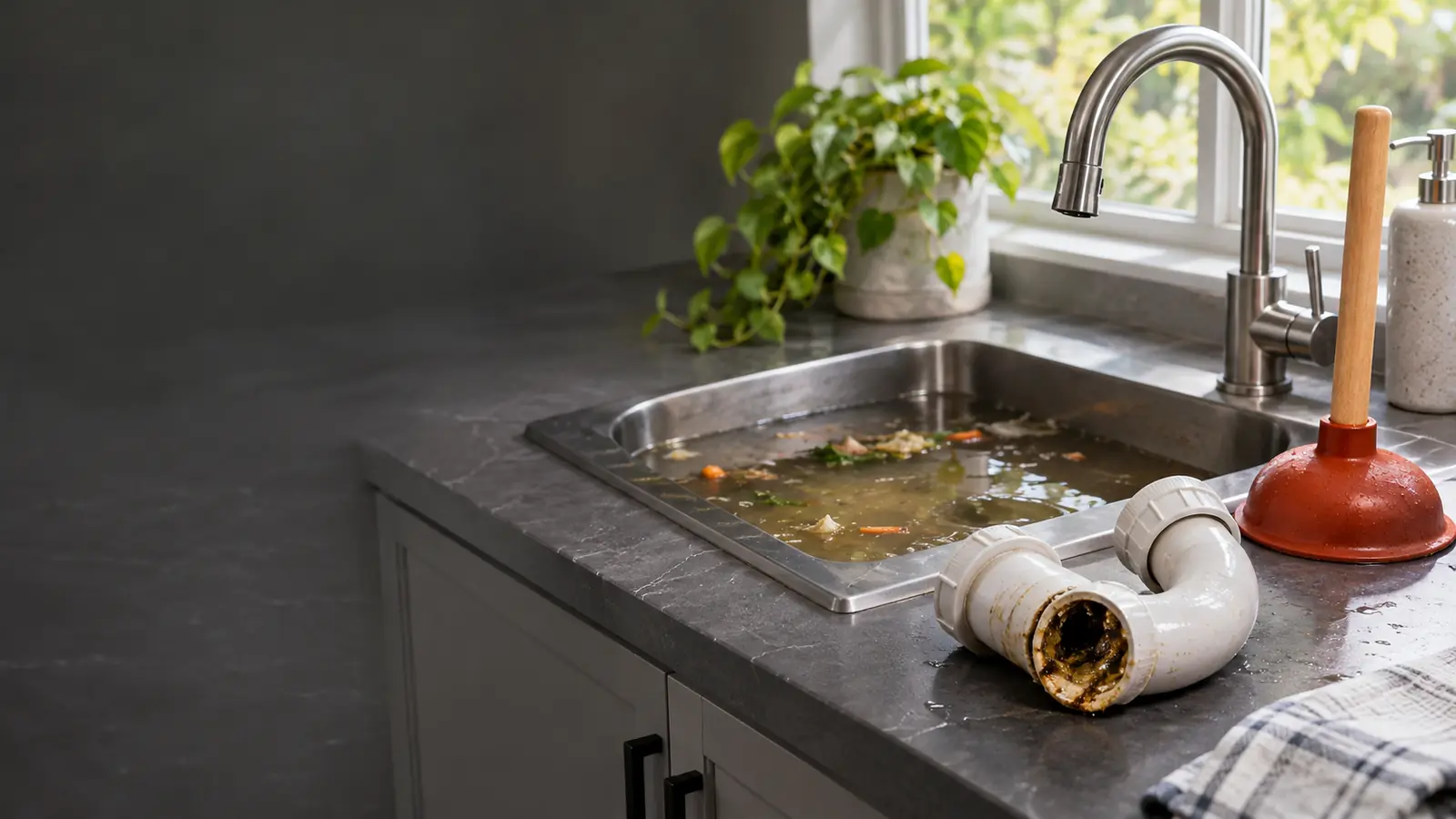
A kitchen sink keeps clogging because grease, food scraps and soap build up inside the drain pipe, catching more debris each time. Disposal misuse, a poorly sloped drain or a partial main-line clog makes it worse.
The Most Common Causes
- Grease and oil. Warm grease flows down the drain, cools and coats the pipe walls.
- Food scraps. Rice, pasta and coffee grounds swell or pack into a paste.
- Garbage disposal misuse. Fibrous peels and too little water leave ground waste in the pipe.
- Soap scum. Soap combines with hard water minerals and grease into sticky buildup.
- Poor drain slope. Pipes with too little fall let solids settle.
- A partial main-line clog. The kitchen is often the first fixture to show a problem farther down the line.
Safe Steps to Clear a Kitchen Sink Clog
- Turn off the garbage disposal power before reaching near it.
- Press the disposal reset button and free a jam with the hex wrench on the bottom.
- Plunge the sink with a flat-bottom plunger, covering the second basin's drain.
- Place a bucket under the trap, remove it and clean it out.
- Use a small hand auger through the drain arm if the trap is clear.
Stop and call a plumber if water backs up into the other basin, the dishwasher or a nearby drain. That points to a clog farther down the line.
Why Chemical Drain Cleaners Make It Worse
Caustic drain cleaners rarely dissolve a grease clog completely. They heat up inside the pipe, can soften old plastic joints and corrode metal, and leave a hazardous liquid sitting in the sink if the clog does not clear. A plumber then has to work around a chemical-filled drain. Mechanical cleaning is safer and more effective.
When a Kitchen Clog Keeps Coming Back
A kitchen drain that clogs every few weeks has buildup on the pipe walls that a cable only punches through. The lasting fix is to clean the full pipe with hydro jetting and run a camera to check for sags or old galvanized drain pipe that has narrowed with rust. See our comparison of hydro jetting vs snaking.
How to Prevent Kitchen Sink Clogs
- Wipe greasy pans with a paper towel before washing
- Use a sink strainer and empty it into the trash
- Run cold water for several seconds before and after using the disposal
- Keep out coffee grounds, eggshells, rice, pasta and fibrous peels
- Use an enzyme cleaner monthly on slow drains
- Run the dishwasher with the disposal clear, since both share the drain
Kitchen Drains in Older Granada Hills Homes
Many mid-century kitchens drain through galvanized steel or cast-iron pipe inside the wall. Both corrode and roughen on the inside, so grease sticks to them faster than to modern ABS pipe. Replacing the old section during a kitchen remodel removes a common source of repeat clogs.
Garbage Disposal Do's and Don'ts
| Do | Don't |
|---|---|
| Run cold water before, during and after grinding | Pour grease or oil down the disposal |
| Feed scraps in gradually | Grind coffee grounds, eggshells or bones |
| Grind small citrus peels to freshen it | Put in fibrous peels, celery or corn husks |
| Use the reset button after a jam | Reach inside while it has power |
Double Sinks and Dishwashers
A double kitchen sink shares one drain, so a clog below the tee backs water into both basins. The dishwasher usually drains into the disposal or a tailpiece, so a kitchen clog often leaves water standing in the dishwasher too. When plunging, block the other basin and the dishwasher hose path so pressure goes toward the clog.
When to Call a Plumber
- Water backs up into another fixture
- The sink clogs more than once a month
- You see water under the cabinet
- A chemical cleaner is sitting in the drain
Why Older Kitchen Drains Clog Faster
A kitchen drain in a mid-century Granada Hills home may run through original galvanized steel or cast iron inside the wall and under the slab. Both materials corrode inside, leaving a rough surface that grabs grease and food particles. Over decades, the opening narrows until even careful habits cannot keep the drain flowing. Hydro jetting can restore the opening for a while, but a camera inspection may show that the pipe itself needs replacing. When you remodel a kitchen, replacing the old drain line while the wall is open costs far less than doing it later.
A Monthly Kitchen Drain Routine
- Clean the sink strainer and disposal splash guard.
- Grind a few ice cubes in the disposal to scrape its walls.
- Pour an enzyme drain cleaner in the evening and let it work overnight.
- Run hot tap water for a minute in the morning.
Signs the Clog Is in the Main Line
If the kitchen sink drains slowly and the lowest bathroom drain gurgles or backs up at the same time, the problem is likely in the main sewer line rather than the kitchen branch. Stop using water and call a plumber, since running more water only pushes it back into the house.
When to Call a Plumber
If this guide matches what you see at home, our licensed plumbers can inspect it and give you a written price. Call (747) 285-3582 to book a plumbing inspection.
Related Questions
Can a clogged kitchen sink affect the dishwasher?
Yes. Most dishwashers drain through the sink drain or disposal, so a kitchen clog often causes water to stand in the dishwasher.
Is boiling water safe for kitchen drains?
Hot tap water helps with light grease. Boiling water can soften PVC joints and crack porcelain, so it is not recommended.
Why does my kitchen sink smell?
Food and grease buildup in the drain or disposal decays and smells. Cleaning the disposal and the drain usually removes the odor.
Can a garbage disposal cause clogs?
Yes, when it is overloaded or run without enough water. Ground waste can settle in the drain line.