
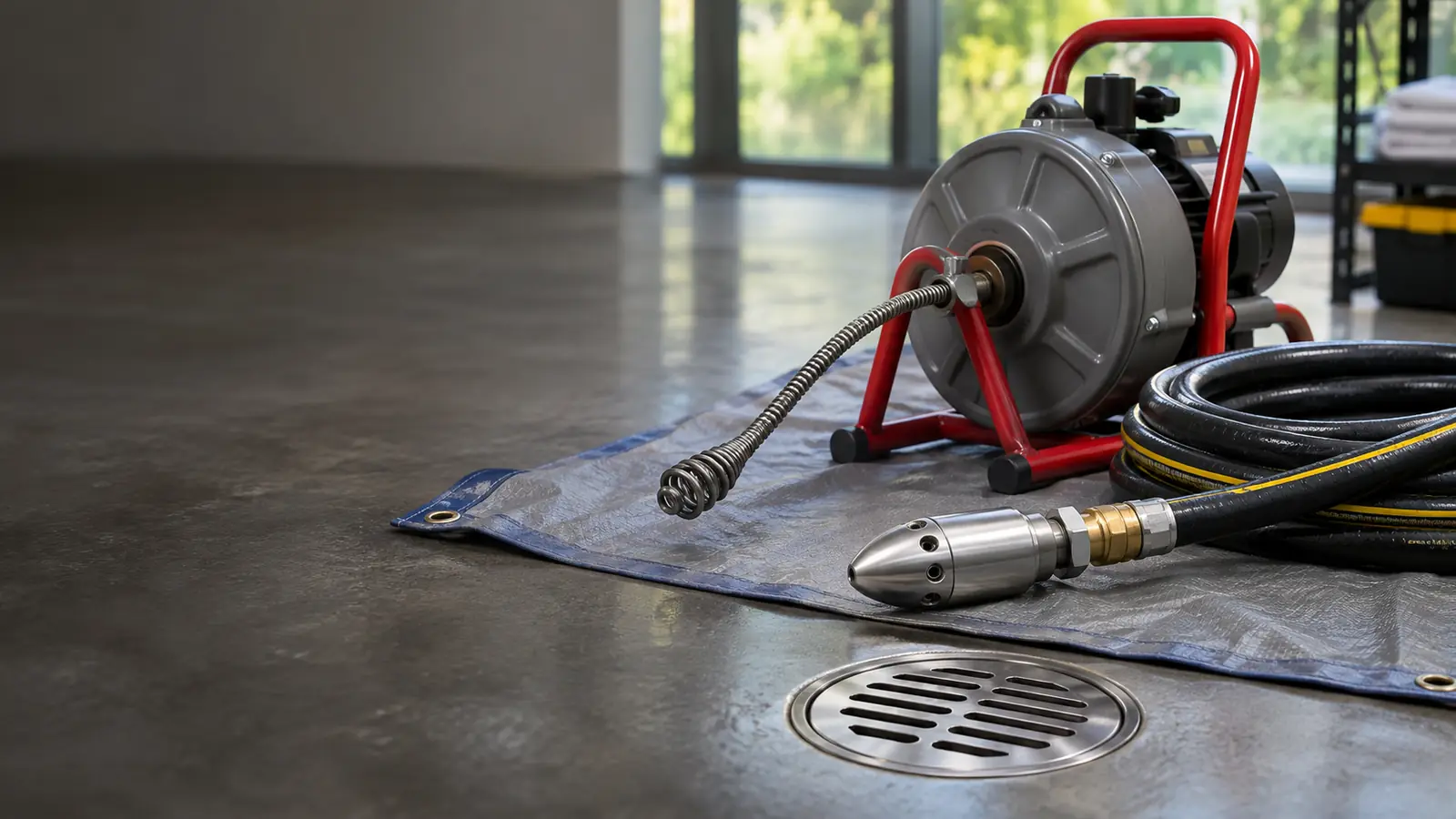
Snaking punches through a clog and suits hair, paper and simple branch clogs. Hydro jetting scours the whole pipe wall and suits grease, sludge, scale and roots. Jetting lasts longer but costs more.
How Drain Snaking Works
A drain snake, or cable machine, feeds a rotating steel cable into the pipe. A cutting head on the end bores through the clog and pulls some debris back out. Snaking opens a path for water but leaves buildup on the pipe walls. It is fast, inexpensive and the right first tool for many clogs.
How Hydro Jetting Works
Hydro jetting sends water at high pressure through a hose with a nozzle that sprays forward and backward. Rear jets pull the hose along while scrubbing grease, sludge, scale and roots off the full circumference of the pipe, and the water flushes debris to the city sewer. A camera inspection before and after confirms the pipe can handle jetting and that it came out clean.
Side-by-Side Comparison
| Factor | Snaking | Hydro jetting |
|---|---|---|
| How it clears | Bores a hole through the clog | Cleans the entire pipe wall |
| Best for | Hair, paper, small objects | Grease, sludge, scale, roots |
| How long results last | Shorter; buildup remains | Longer; walls are cleaned |
| Pipe condition needed | Works in most pipes | Pipe must be structurally sound |
| Typical cost | Lower | Higher |
| Camera inspection | Optional | Recommended first |
When to Choose Snaking
- A single bathroom sink, tub or toilet is clogged
- It is the first clog in a long time
- The pipe is fragile or its condition is unknown
- You need a quick, low-cost fix
When to Choose Hydro Jetting
- The same line clogs again within weeks or months
- A kitchen line is coated with grease
- Roots have entered the sewer lateral
- Cast-iron drains are crusted with scale
- The line is being cleaned before trenchless lining
Is Hydro Jetting Safe for Old Pipes?
Usually, yes, when the pipe is inspected first. Jetting can make an already broken or collapsed pipe worse, so a camera check comes first and the pressure is set for the pipe material. If the camera shows serious damage, the line needs repair rather than jetting.
Why Many Jobs Use Both
Plumbers often snake a fully blocked line first to restore flow, run a camera to see the pipe, then jet it to clean the walls. That sequence gets water moving quickly and leaves a clean, documented line. Learn more about our drain cleaning service.
What to Expect During Each Service
A snaking visit is usually short: the plumber finds the access point, runs the cable through the clog, tests the drain and cleans up. A hydro jetting visit takes longer because it starts and ends with a camera inspection, and the jetter is set up outside at a cleanout. Jetting is quieter inside the home since the equipment stays outdoors.
Signs a Clog Needs More Than a Snake
- The drain clogs again within a few weeks
- Several fixtures are slow at the same time
- The cable comes back coated in grease or root fibers
- Water drains slowly even after the cable passes through
- The home has cast-iron drains or a clay sewer lateral
What Affects the Price of Each
Snaking costs less because it uses simpler equipment and takes less time. Jetting costs more because of the equipment, the camera inspections and the time needed to clean the full pipe. For lines that clog repeatedly, jetting often costs less over time than repeated snaking visits.
Which Method Is Better for Grease?
Grease is where the difference between the two methods matters most. A snake punches a hole through a grease clog, and water flows again, but the grease coating on the pipe walls remains. Within weeks, food and soap stick to that coating and the clog returns. Hydro jetting removes the coating itself, restoring the pipe's full opening. That is why restaurants, apartment buildings and homes with heavy cooking often schedule jetting instead of waiting for clogs. For a single household kitchen clog, snaking may be enough the first time; if it returns, jetting is the better next step.
Which Method Is Better for Roots?
Both methods can remove roots. A cable with a root-cutting blade trims roots at the pipe wall. A jetter with a root-cutting nozzle cuts roots and flushes the debris away, cleaning the joints more completely. Neither seals the joints, so roots return until the pipe is repaired.
Can You Snake a Drain Yourself?
A small hand auger is a reasonable DIY tool for a bathroom sink or tub drain. Powered drum machines and main-line cables are heavier, can kink or break inside the pipe, and can cause injury if the cable whips. Hydro jetters use water at pressures that can injure skin. For main lines and repeat clogs, a plumber with the right equipment and a camera is the safer choice.
When to Call a Plumber
If this guide matches what you see at home, our licensed plumbers can inspect it and give you a written price. Call (747) 285-3582 to book a plumbing inspection.
Related Questions
Can I rent a hydro jetter?
Rental jetters exist, but high-pressure water can injure skin and damage weak pipe. Main-line jetting is best left to a trained plumber.
How often should a drain be jetted?
Most homes only need it to clear a problem. Lines with roots or heavy grease use benefit from scheduled cleaning.
Is snaking bad for pipes?
No, when done correctly. An oversized cable or careless technique can scratch old pipe, so the cable is matched to the line.
Does jetting remove the need for repairs?
No. Jetting cleans the pipe but cannot fix cracks, sags or broken joints.
Which method is faster?
Snaking a simple clog is usually faster. Jetting takes longer because it includes camera inspections and cleans the full pipe.