
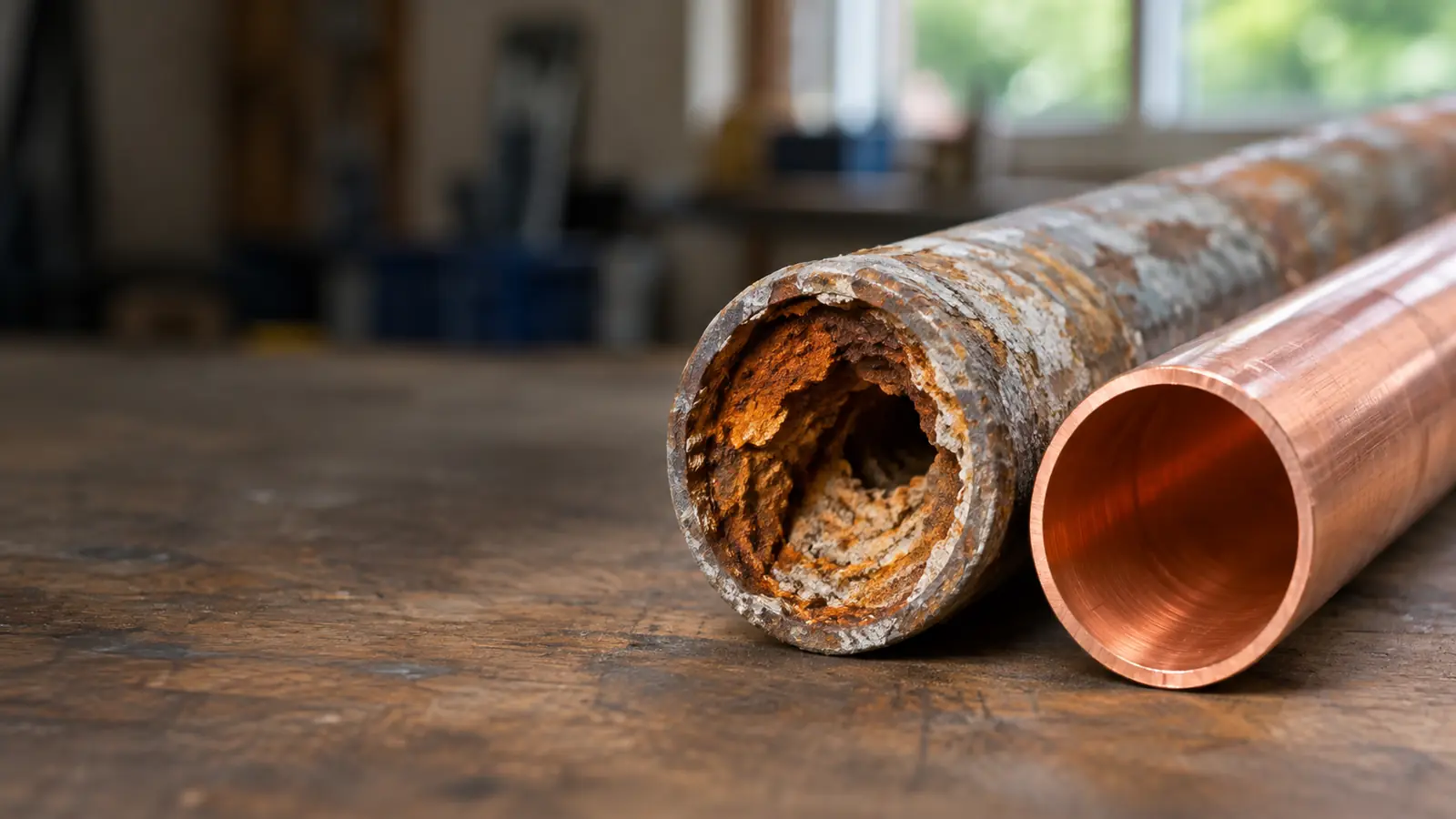
Repipe when galvanized pipes cause rusty water, low pressure at several fixtures or repeated leaks. Galvanized steel supply pipe typically lasts about 40 to 50 years, so original pipe in a 1950s or 1960s home is past its expected life.
What Are Galvanized Pipes?
Galvanized pipes are steel water pipes coated with zinc to slow rust. Builders used them for water supply lines in many homes before the 1970s, including much of Granada Hills' post-war housing. Over time the zinc wears away and the steel corrodes from the inside.
How to Tell If Your Home Has Galvanized Pipes
- Find exposed pipe at the water heater, under sinks or where the main enters the house.
- Look for dull silver-gray pipe with threaded fittings.
- Scratch it with a key: galvanized steel stays gray, copper shows a penny color.
- Hold a magnet to it. A magnet sticks to galvanized steel, not to copper or plastic.
Signs Galvanized Pipes Are Failing
- Rusty or brown water, especially first thing in the morning
- Low pressure as rust narrows the inside of the pipe
- Leaks at threaded joints, where the pipe wall is thinnest
- Uneven pressure between fixtures
Repair or Repipe?
Replacing one leaking section of galvanized pipe buys time, but the rest of the system is the same age. Most homeowners with original galvanized pipe choose a full repipe with PEX or copper. A repipe ends rust, restores pressure and usually takes a few days. See our whole-house repiping service for PEX and copper options.
Do Galvanized Pipes Affect Home Sales?
Yes. Home inspectors flag galvanized supply pipe, and some insurers ask about pipe material. Repiping before a sale removes a common negotiation point.
Galvanized Pipe Compared with Modern Pipe
| Material | How it fails | Hard water performance |
|---|---|---|
| Galvanized steel | Rusts from the inside, narrowing the pipe until it leaks at threads | Poor; scale and rust build together |
| Copper | Pinhole leaks after many years, especially with high pressure | Good |
| PEX | Damage from sunlight exposure or poor installation | Very good; resists scale |
Why Galvanized and Copper Should Not Touch
When galvanized steel connects directly to copper, the two metals react in water and the steel corrodes faster at the joint. This is called galvanic corrosion. Plumbers join the two with a dielectric union or fitting that separates the metals. Many older homes have patched sections of copper joined directly to galvanized pipe, and those joints are common leak points.
Partial vs Full Repipe
A partial repipe replaces only the worst sections, such as the line to one bathroom. It costs less now but leaves the rest of the galvanized pipe in place, so rust flakes from old sections can still clog new fixtures. A full repipe replaces every supply line at once, restores pressure everywhere and ends the cycle of repairs. Most owners of homes with original galvanized pipe choose a full repipe.
What Affects the Cost of Repiping
- Number of bathrooms and fixtures that need new lines
- Pipe material: PEX costs less than copper
- Single-story or two-story layout and attic access
- Wall finishes such as tile or plaster that are harder to open
- Main line replacement from the meter to the house
- Permit and drywall patching
We give a written price after walking through the home.
How Long Does a Repipe Take?
Most single-family homes are repiped in 2 to 5 days. Water is restored at the end of most workdays, so families usually stay home during the project.
Buying a Home with Galvanized Pipes
Galvanized supply pipe is common in Granada Hills homes listed for sale, and it should shape your offer. Before you buy:
- Ask the seller whether any part of the home has been repiped, and when.
- Run several faucets at once and watch for low pressure or rusty water.
- Look at exposed pipe at the water heater, under sinks and at the main line.
- Get a written repipe estimate during the inspection period.
- Schedule a sewer camera inspection, since homes with galvanized supply pipe often have original clay or cast-iron drains.
Galvanized Main Water Lines
The underground line from the water meter to the house is often galvanized in older homes. A rusted main limits pressure to every fixture, so replacing only the indoor pipes does not restore full pressure. We test the main line during every repipe estimate.
Rusty Water: Galvanized Pipes or the Water Heater?
Rusty water can come from the pipes or from the water heater. Run only the cold water at a faucet. If the cold water is rusty, the supply pipes are the likely source. If only the hot water is rusty, the water heater tank or its anode rod is the likely source. Homes with galvanized pipe and an old water heater often have both problems at once.
When to Call a Plumber
If this guide matches what you see at home, our licensed plumbers can inspect it and give you a written price. Call (747) 285-3582 to book a plumbing inspection.
Related Questions
Are galvanized pipes dangerous?
They can be. Corroded galvanized pipe can collect lead from older connected plumbing. If you are concerned, test your water and consider repiping.
Can galvanized drain pipes be a problem too?
Yes. Galvanized drain lines rust and clog over time, often under kitchen and laundry sinks.
Will repiping improve my water pressure?
Yes, in most homes with galvanized pipe. New pipe has a full inside diameter, while old galvanized pipe is narrowed by rust.
Can galvanized pipes be cleaned instead of replaced?
No. Rust forms in the pipe wall itself, so cleaning cannot restore its strength or diameter. Replacement is the lasting fix.
Do insurers care about galvanized pipes?
Some do. Certain insurers ask about pipe material and may limit coverage for homes with old galvanized supply lines.
Are galvanized gas pipes a problem?
Gas lines in older homes are usually black iron, not galvanized. Galvanized pipe was mainly used for water supply.