
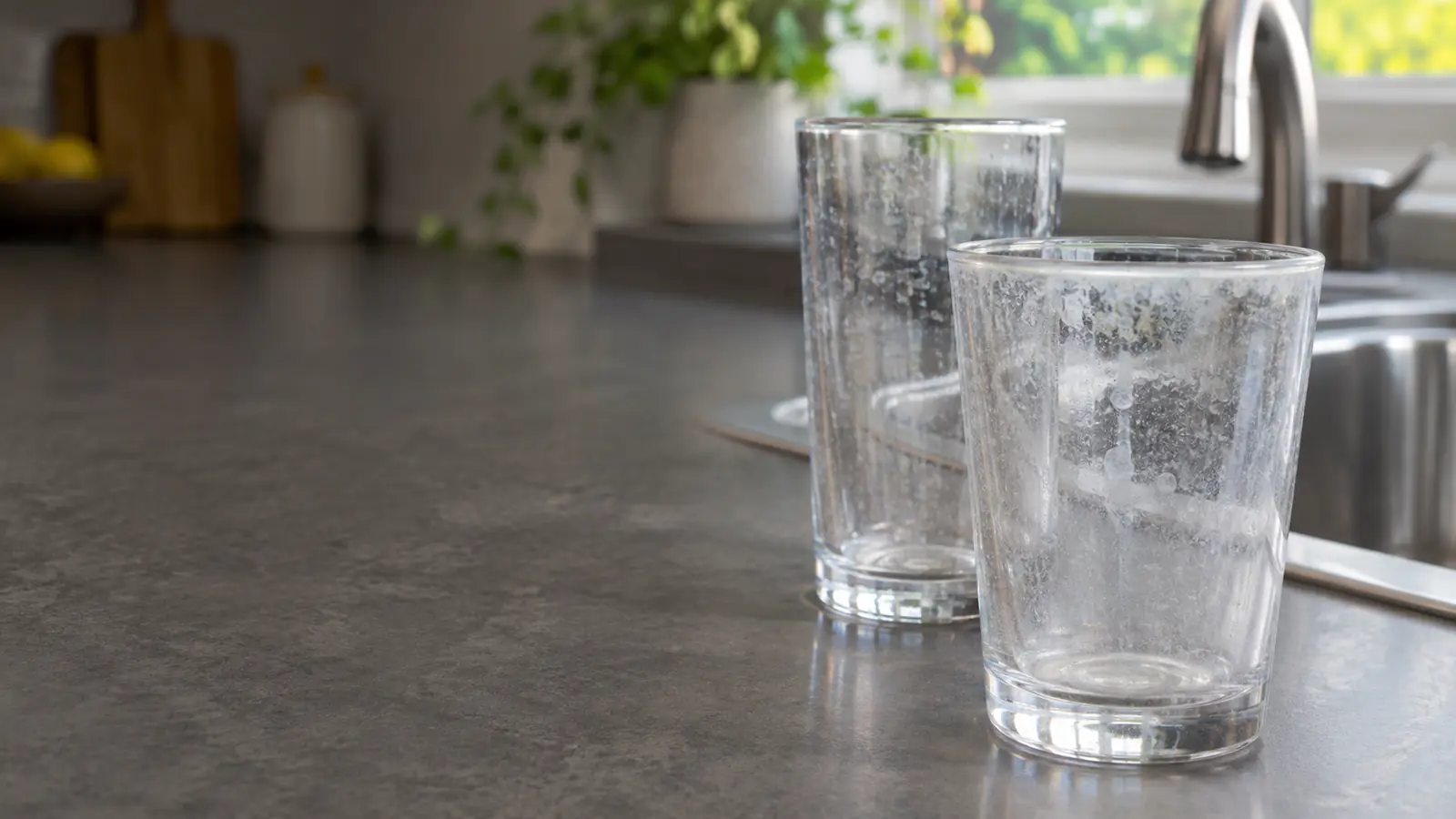
It depends on your goals. Granada Hills water is moderately hard to hard, so a softener helps if you want to protect a tankless heater or fixtures, or you dislike scale and spots. It is not required for safety.
How Hard Is Granada Hills Water?
Granada Hills is served by LADWP, which supplies the San Fernando Valley with a blend of Los Angeles Aqueduct water, local groundwater and imported water. Valley hardness typically runs about 6.0 to 8.2 grains per gallon (gpg), which is moderately hard to hard, and it shifts as the blend changes. Many water treatment specialists treat about 7 gpg as the point where a softener becomes worthwhile.
Who Benefits Most From a Softener
| Household | Benefit |
|---|---|
| Homes with a tankless water heater | Protects the heat exchanger and may support warranty terms |
| Homes after a repipe or remodel | Keeps new fixtures and glass free of scale |
| Large households | More water use means more scale |
| People with dry skin | Many find softened water gentler |
| Homes with frequent fixture repairs | Fewer scale-related drips and running toilets |
Signs Hard Water Is Costing You Money
- Water heater popping or rumbling from sediment
- Faucets and shower heads that clog with white crust
- Running toilets from flappers that will not seal
- Dishes that need rewashing
- Frequent tankless error codes or descaling
When You May Not Need One
A softener is optional. If your water heater is a standard tank you flush yearly, spots and scale do not bother you, and you are happy cleaning aerators every few months, you can skip it. A softener treats a nuisance and an equipment cost, not a health risk; hardness is not a health concern.
Alternatives to a Salt-Based Softener
- Salt-free scale conditioner: reduces scale on surfaces without salt or a drain
- Point-of-use scale filter: protects one appliance, such as a tankless heater
- Reverse osmosis at the kitchen sink: for drinking and cooking water
- Regular maintenance: annual flushing and descaling
Rules and Practical Checks Before Installing
- Confirm whether your city restricts softeners that discharge salt to the sewer; some Southern California communities do.
- Plan a location near the main line with a drain and, for most models, an outlet.
- Keep irrigation and hose bibs on unsoftened water.
- Consider one kitchen tap on unsoftened or reverse osmosis water for drinking.
- Size the unit to your household; see our water softener service.
Softened Water and Sodium
A salt-based softener adds a small amount of sodium to the water as it removes hardness. People on low-sodium diets often use potassium chloride instead of salt, or drink from an unsoftened or reverse osmosis tap. Read more in our guide to hard water in the San Fernando Valley.
What It Costs to Own a Softener
Beyond installation, a salt-based softener has ongoing costs: salt or potassium refills, occasional resin cleaner, and the water and electricity used during regeneration. Salt-free conditioners have lower running costs. Weigh these against savings from longer-lasting water heaters, fewer fixture repairs and less descaling.
How to Test Your Hardness at Home
- Buy hardness test strips from a hardware or pool store.
- Fill a clean glass with cold tap water.
- Dip the strip for the time listed on the package.
- Compare the color to the chart in grains per gallon or mg/L.
- Divide mg/L by 17.1 to convert to grains per gallon.
Softener Maintenance at a Glance
- Check salt monthly
- Break up salt bridges
- Clean the resin once or twice a year
- Have the control valve checked if water feels hard again
Hard Water and Granada Hills Plumbing
Many Granada Hills homes combine hard water with aging plumbing: original galvanized or copper supply lines, older water heaters and fixtures that have seen decades of scale. In those homes, hard water speeds up problems that are already underway, such as clogged aerators, noisy water heaters and running toilets. A softener does not repair old pipe, but it slows new scale in a repiped home, a new water heater or a tankless system. If you are about to invest in new plumbing, adding treatment at the same time protects that investment.
Questions to Ask Before Buying a Softener
- What is my water hardness, and how was it tested?
- What size softener does my household need, and why?
- Where will it be installed, and is a drain and outlet available?
- How often will it regenerate, and how much salt will it use?
- What warranty covers the tank, resin and control valve?
Softeners and Septic, Pools and Plants
Most Granada Hills homes are on city sewer, not septic, so softener discharge goes to the public sewer where local rules allow it. Pools are filled from the hose bib, which is usually left on unsoftened water. Lawns and gardens do best on unsoftened water too, because sodium can build up in soil. A plumber can route these outdoor lines around the softener during installation.
When to Call a Plumber
If this guide matches what you see at home, our licensed plumbers can inspect it and give you a written price. Call (747) 285-3582 to book a plumbing inspection.
Related Questions
Will a softener remove chloramine taste?
No. A softener removes hardness minerals. A carbon filter reduces chloramine taste and odor.
How much space does a softener need?
A typical home softener has a resin tank and a brine tank that fit in a small area of the garage or beside the house.
Can I test my water before deciding?
Yes. Test strips give a quick reading, and a plumber can test hardness during a visit.
Does a softener need a drain?
Yes. Salt-based softeners send regeneration water to a drain. Salt-free conditioners do not.
Will a softener fix old pipes?
No. A softener slows new scale but does not repair corroded or narrowed pipe.