
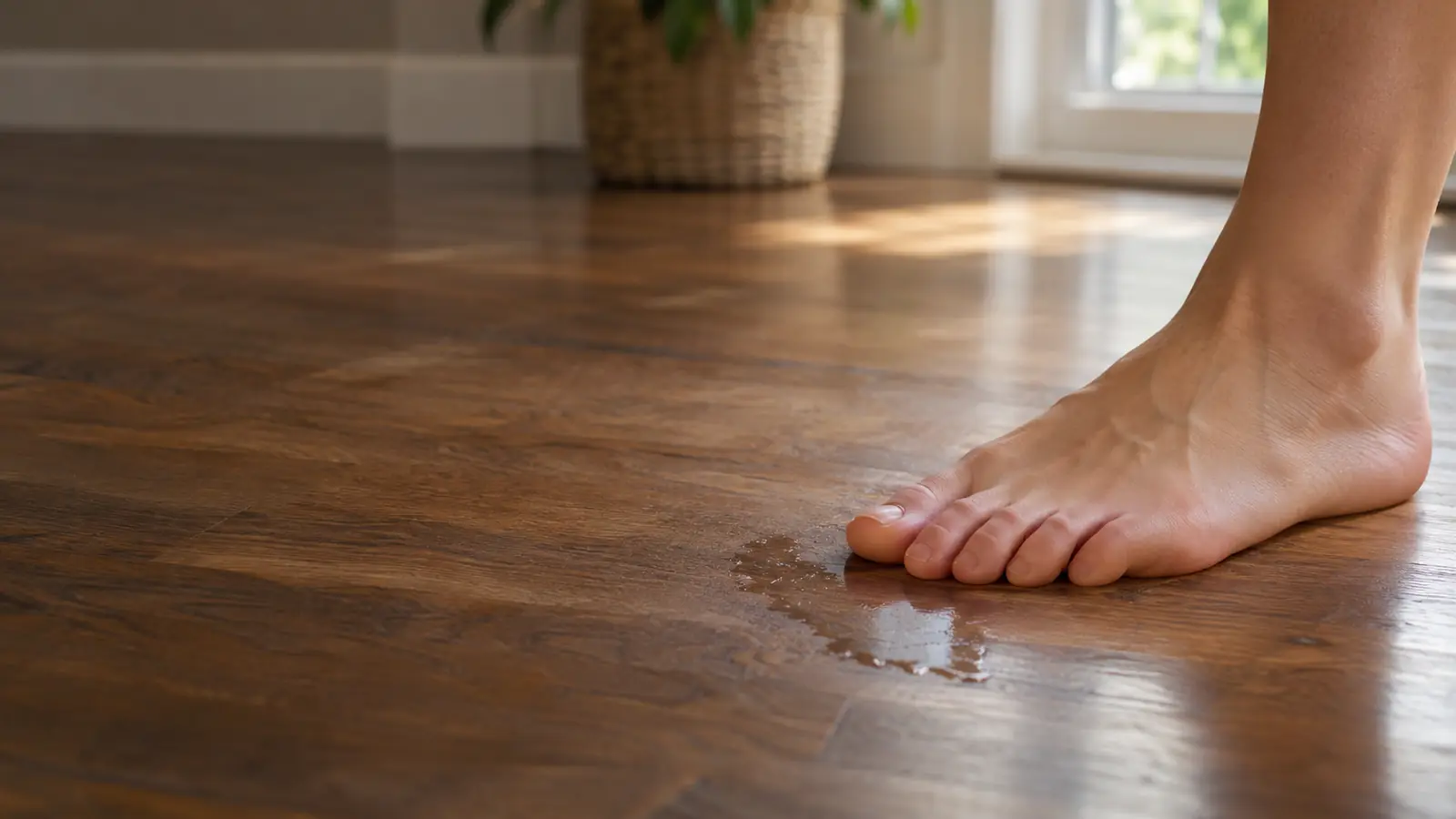
The most common slab leak signs are an unexplained jump in the water bill, the sound of running water with every tap off, warm spots on the floor, damp flooring, new cracks, mold smell and low water pressure.
What Is a Slab Leak?
A slab leak is a leak in a water supply or drain pipe that runs under or inside a concrete slab foundation. Most Granada Hills homes are built on slabs with copper water lines beneath them, so a pinhole in one of those lines releases water into the soil and concrete where you cannot see it.
7 Signs of a Slab Leak
- A higher water bill. A leak runs 24 hours a day, so even a pinhole adds up. Compare your LADWP bill with the same period last year.
- Running water sounds. A hiss or trickle under the floor with every fixture off points to a pressurized line leaking.
- Warm spots on the floor. A leak on the hot water line heats the slab above it. Bare feet often notice it first on tile.
- Damp or warped flooring. Carpet pads stay wet, hardwood cups and laminate swells along the leak path.
- New cracks. Water washing soil out from under the slab lets it settle, cracking tile, drywall or the slab itself.
- Mold or musty smell. Moisture wicks into baseboards and walls, growing mold behind them.
- Low water pressure. Water escaping from the line leaves less for your fixtures.
How to Check for a Slab Leak with Your Water Meter
Your water meter tells you whether water is leaving the system when nothing is running.
- Turn off every faucet, appliance and the irrigation system.
- Find the meter box near the street and lift the lid.
- Watch the small leak indicator (a triangle or star) for 2 minutes.
- If it moves, water is leaking somewhere after the meter.
- Close the main shut-off at the house. If the indicator stops, the leak is inside the home or under the slab.
Why Slab Leaks Happen
Slab leaks form when copper pipe wears thin. Hard water, small amounts of soil movement, and pipes rubbing against concrete or gravel all wear the pipe over decades. Strong earthquakes add stress: the 1994 Northridge earthquake produced concentrated ground deformation in parts of Granada Hills and Mission Hills, according to the U.S. Geological Survey.
What to Do If You Think You Have a Slab Leak
Book professional leak detection and slab leak repair. A plumber pressure-tests the lines, then uses acoustic and thermal equipment to pinpoint the leak before any concrete is opened. If the home has had several leaks, ask about rerouting or a whole-house repipe.
How Plumbers Find a Slab Leak
Professional slab leak detection narrows the search in stages, so the concrete is opened only once:
- Confirm the leak at the water meter with every fixture off.
- Isolate hot or cold by pressure-testing each side of the system.
- Trace the pipe route under the slab with a pipe locator.
- Listen along the route with an acoustic ground microphone for escaping water.
- Scan with a thermal camera to see warm water spreading under a hot line leak.
- Mark the spot on the floor where the repair opening will go.
Slab Leak Repair Options
A slab leak can be repaired three ways. The age and condition of the rest of the pipe decides which one makes sense:
| Option | What happens | Choose it when |
|---|---|---|
| Spot repair | Open the floor at the leak and replace the damaged section | It is the first leak and the pipe is in good condition |
| Reroute | Abandon the leaking line and run new pipe through walls or the attic | The under-slab pipe is old or hard to reach |
| Repipe | Replace the whole supply system | The home has had two or more leaks |
Rerouting avoids breaking flooring and moves the pipe where future problems are easy to reach.
Does Homeowners Insurance Cover Slab Leaks?
It depends on the policy. Many homeowners policies pay to access the leak (opening and restoring the floor) and for sudden water damage, but not for the pipe repair itself or for damage from a slow leak that went unaddressed. Call your insurer before repairs begin, and keep the plumber's leak report, photos and invoice.
Can You Prevent Slab Leaks?
You cannot stop pipes from aging, but you can slow the wear that causes most slab leaks:
- Keep water pressure at or below 80 psi with a working pressure regulator.
- Reduce hard water scale with a softener or scale conditioner.
- Check your water bill monthly so a new leak is caught early.
- Test the meter once or twice a year using the steps above.
- Reroute or repipe after a second leak instead of repairing them one at a time.
Slab Leak or Something Else?
A few other problems look like a slab leak at first. Rule them out before booking detection:
- A running toilet moves the meter's leak indicator. Put food coloring in the tank and check the bowl after 15 minutes.
- An irrigation leak raises the bill. Check the meter with the sprinkler valves off.
- Radiant floor heating or a heat duct can warm a floor. Check whether the warm spot changes with the heater off.
- Condensation or a window leak can dampen carpet near exterior walls.
When to Call a Plumber
If this guide matches what you see at home, our licensed plumbers can inspect it and give you a written price. Call (747) 285-3582 to book a plumbing inspection.
Related Questions
Is a slab leak an emergency?
It depends on the size. A large leak, flooding or a hot water leak is urgent. Shut off the main water valve and call a plumber. A slow leak still needs repair soon to protect the foundation.
Can a slab leak fix itself?
No. A leaking pipe under concrete only gets worse as water erodes the soil and the hole widens.
How long does slab leak repair take?
A spot repair or reroute usually takes one day. A whole-house repipe takes 2 to 5 days.
Can a slab leak cause foundation damage?
Yes, if it runs long enough. Escaping water can wash soil from under the slab and lead to settling and cracks.