
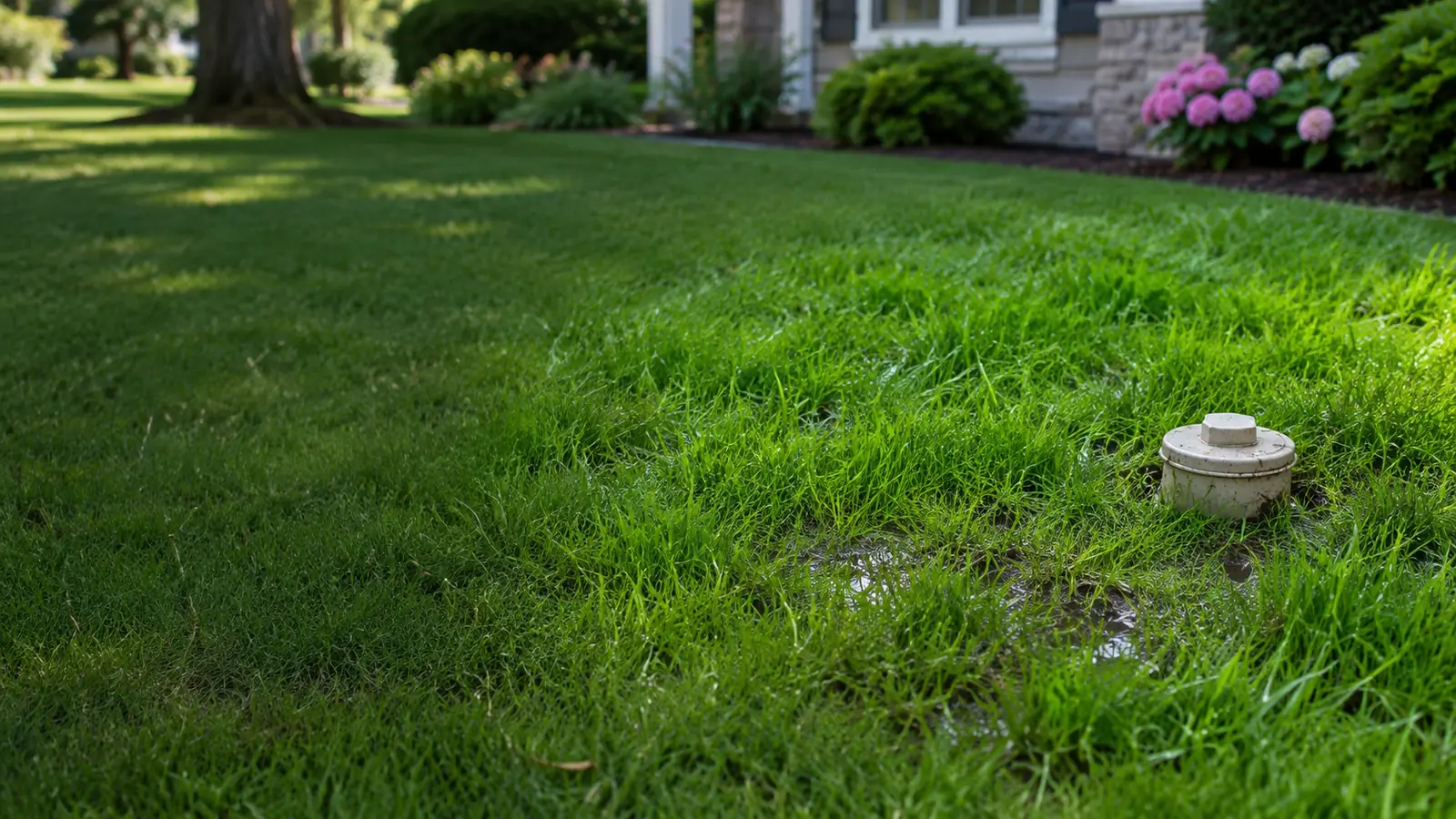
The main signs of a broken sewer line are backups in several drains at once, sewage odor in the yard, soggy or extra-green lawn patches, repeat main-line clogs and pests entering through drains.
Why Older Homes Have Sewer Line Problems
A sewer line, or sewer lateral, carries all wastewater from the house to the city sewer main. In many Granada Hills homes built in the 1950s and 1960s, that line is vitrified clay pipe with joints every few feet, or cast iron under the house. Decades of tree roots, ground movement and corrosion break down both materials. Problems often stay hidden until a backup reaches the house.
8 Signs of a Broken Sewer Line
- Several drains back up at once. A single slow sink is a branch clog; a tub that fills when the toilet flushes points to the main line.
- Sewage odor outdoors. A break lets sewer gas escape into the soil near the foundation or along the line's path.
- Soggy or extra-green lawn strips. Leaking wastewater waters and fertilizes the grass above the pipe.
- Repeat main-line clogs. Clearing the same clog every few months means something in the pipe keeps catching debris.
- Gurgling toilets and drains. Air trapped by a partial blockage bubbles back through fixtures.
- Water in the cleanout. Standing water in the outdoor cleanout means the blockage is downstream.
- Rodents or insects from drains. Rats and roaches enter homes through breaks in sewer pipes.
- Settling or sinkholes. Soil washed into a broken pipe leaves depressions in the yard or driveway.
What Breaks Sewer Lines
| Cause | How it damages the pipe |
|---|---|
| Tree roots | Grow into clay joints seeking water and widen them |
| Ground movement | Earthquakes and settling shift joints out of line |
| Corrosion | Cast iron rusts and scales from the inside |
| Bellies | Sunken sections hold waste and solids |
| Grease and wipes | Catch on joints and roots to form blockages |
| Age | Orangeburg fiber pipe deforms and collapses |
What to Do If You See These Signs
- Stop running water and flushing toilets if drains are backing up.
- Open the outdoor cleanout cap if it is safe, so sewage overflows outside.
- Call a plumber to clear the line.
- Ask for a camera inspection right after the line is cleared.
- Review the video and repair options before deciding.
A sewer camera inspection shows exactly where and why the line is failing.
Is a Broken Sewer Line an Emergency?
It depends on what is happening. Sewage backing up into the home is an emergency, because wastewater carries bacteria and damages floors and walls quickly. Slow drains and odors are urgent but can usually wait for a scheduled visit, as long as you limit water use until the line is inspected.
Repair Options After a Diagnosis
Limited damage can often be fixed with a spot repair. Root-damaged clay with sound alignment is a candidate for trenchless lining. A collapsed, sagging or badly offset line usually needs replacement by pipe bursting or open trench. Our sewer line replacement cost guide explains what each option costs.
How Plumbers Confirm a Broken Sewer Line
- Ask about symptoms, past clogs and the home's age.
- Clear any blockage to restore flow.
- Run a camera from the cleanout toward the street.
- Locate the camera head above ground to mark defects and depth.
- Review the video with you and explain repair options.
How to Protect an Older Sewer Line
- Keep grease, wipes and paper towels out of drains
- Plant trees away from the sewer path
- Schedule cleaning if a camera found roots
- Install a cleanout if the home has none
- Inspect after strong earthquakes or new backups
Sewer Problems Common in Granada Hills
Granada Hills sits on ground that moved during the 1994 Northridge earthquake, and many homes have clay laterals and cast-iron drains from the 1950s and 1960s. The most common sewer findings here are roots entering clay joints, joints shifted out of line, sagging sections that hold water, and corroded cast iron under the house. Mature trees, including citrus left from the area's orchard past, add to the root problem. Homes that were never camera-inspected may have had these defects for years before the first backup.
Why Early Inspection Saves Money
A slow drain or a single main-line clog is the cheapest moment to find a sewer problem. Clearing the line and running a camera costs a fraction of a repair, and it shows whether the line needs cleaning, a spot repair or a full replacement. Waiting until sewage reaches the house adds cleanup, flooring and possible health costs to the same repair. If you notice two or more of the signs above, book an inspection rather than another round of snaking.
Questions to Ask After the Inspection
- Where exactly is the damage, and how deep?
- Is the rest of the line in good condition?
- Which repair methods are possible?
When to Call a Plumber
If this guide matches what you see at home, our licensed plumbers can inspect it and give you a written price. Call (747) 285-3582 to book a plumbing inspection.
Related Questions
Can a broken sewer line make you sick?
Sewage carries bacteria and viruses. Avoid contact with backed-up wastewater and have contaminated areas professionally cleaned.
Who fixes the sewer line under the street?
In the City of Los Angeles, the property owner is responsible for the private lateral all the way to the street sewer main.
How can I tell a sewer clog from a drain clog?
A drain clog affects one fixture. A sewer clog affects several fixtures, usually starting with the lowest drain in the house.
Can a camera inspection find the exact break?
Yes. A locator above ground finds the camera head and marks the defect's position and depth.
Do sewer problems get worse in winter?
Heavy rain can raise groundwater and add flow to damaged lines, making backups more likely during storms.