
Sewer line replacement averages about $3,319 nationally, according to Angi, with typical per-foot prices of $50 to $250. Length, depth, method and access decide where your project falls.
National Sewer Line Costs
Angi reports that sewer line replacement costs about $3,319 on average, ranging from $225 to $10,000 depending on material, pipe length and other factors. HomeServe's cost guide puts the national average for full sewer line replacement of 25 to 75 feet of pipe at about $6,633, and a repair to a collapsed section at about $1,581.
The wide spread reflects the difference between fixing one broken section and replacing the whole lateral from the house to the street.
National averages are a starting point. Los Angeles projects often cost more than the national figures because of higher labor rates, city permit fees and the age of local homes. A written quote after an inspection is the only reliable number for your home.
Repair Methods and How They Compare
| Method | What it involves | Cost drivers |
|---|---|---|
| Spot repair | Dig at one damaged section | Depth and what is above it |
| Pipe lining (CIPP) | Resin liner cured inside the old pipe | Length, pipe diameter, cleaning first |
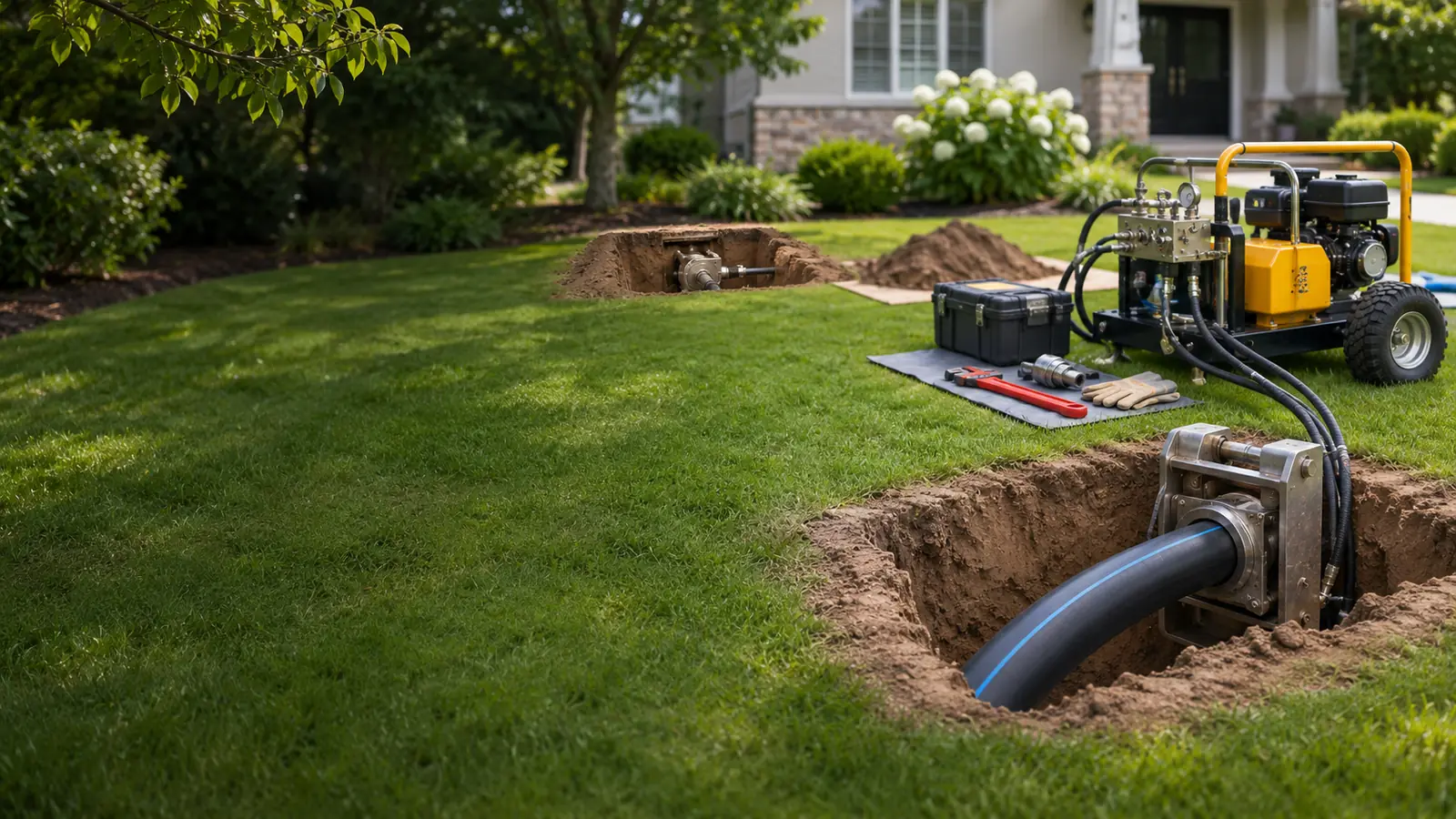
| Pipe bursting | New HDPE pipe pulled through the old | Length, two access pits |
| Open trench | Excavate and replace the full line | Length, depth, restoration of yard and hardscape |
What Makes Sewer Replacement Cost More?
- Length: long setbacks from the street mean more pipe
- Depth: deeper lines need more digging and shoring
- Obstacles: driveways, mature trees, patios and pools above the line
- Street work: the connection under the sidewalk or street needs city permits
- Condition: collapsed or badly sagging pipe may rule out trenchless methods
- Cleanout: adding a cleanout if the home has none
Trenchless vs Open Trench: Which Saves Money?
Trenchless methods can cost more per foot but avoid the cost of tearing out and replacing driveways, landscaping and hardscape. When the line runs under a driveway or mature trees, trenchless often costs less in total. When the line runs under open lawn and is shallow, open-trench replacement can be the lower total. A camera inspection decides which methods are possible.
Who Pays for the Sewer Line in Los Angeles?
In the City of Los Angeles, property owners are responsible for their entire private sewer lateral, from the building to the connection at the street sewer main. That includes the part under the sidewalk and street, so a full replacement often involves city permits for work in the public right of way.
LA Sanitation Sewer Lateral Rebates
LA Sanitation and Environment (LASAN) offers rebates to eligible City of Los Angeles property owners for a sewer lateral video inspection and for sewer lateral repair. Funds are limited each year and paid first-come, first-served, so check availability with LASAN before work begins. See our sewer camera inspection page for how the inspection fits in.
How to Get an Accurate Sewer Quote
- Start with a camera inspection and ask for the video.
- Ask for the line's length and depth from the locator.
- Request prices for each workable method.
- Confirm that permits, street work and restoration are included.
- Ask what warranty covers the new pipe and the work.
Per-Foot Pricing Explained
Sewer work is often priced by the linear foot. Angi's cost data puts sewer line repair and replacement at about $50 to $250 per foot, with many projects near $150 per foot. Per-foot prices include digging or access, pipe and labor, but some quotes list permits, cleanouts and restoration separately. Multiply your line's length by the per-foot price, then add those extras for a realistic total.
Costs People Forget to Budget
- The camera inspection and locating
- City permits and inspections, including street work
- A new two-way cleanout
- Concrete, driveway and landscape restoration
- Hauling away soil and old pipe
- Hydro jetting before a liner is installed
Sewer Costs in Older Granada Hills Neighborhoods
Many Granada Hills homes still have their original vitrified clay sewer laterals from the 1950s and 1960s. Clay itself lasts a long time, but its joints every few feet let roots in, and decades of ground movement, including the 1994 Northridge earthquake, shifted many of them. Repairs in these neighborhoods often involve long setbacks from the street, mature trees above the line and driveways that owners want to keep. Those conditions favor trenchless methods, which avoid tearing up hardscape and landscaping, even though trenchless work can cost more per foot. A camera inspection decides which methods fit your line, and the video helps compare quotes on the same facts.
Paying for a Sewer Repair
Ask your insurer whether your policy has a service line endorsement, check whether you qualify for a LASAN sewer lateral rebate while funds last, and ask your plumber about phasing work when only part of the line has failed. Get every option in writing before deciding.
Can You Repair Only Part of the Line?
Yes, when the camera shows the rest of the line is sound. Spot repairs and short liners fix localized damage at lower cost, while a full replacement makes sense when defects are spread along the line.
When to Call a Plumber
If this guide matches what you see at home, our licensed plumbers can inspect it and give you a written price. Call (747) 285-3582 to book a plumbing inspection.
Related Questions
Does homeowners insurance cover sewer line replacement?
Often not for wear, roots or age. Some insurers sell a service line endorsement that covers buried lines.
How long does sewer line replacement take?
Trenchless replacement often takes 1 to 2 days. Open-trench replacement can take several days, plus restoration.
Can a sewer line be repaired instead of replaced?
Yes, when the damage is limited to one section. A camera inspection shows whether the rest of the line is sound.
Do I need a new cleanout with a new sewer line?
Often, yes. Many older homes have none, and a cleanout makes future service easier and cheaper.