
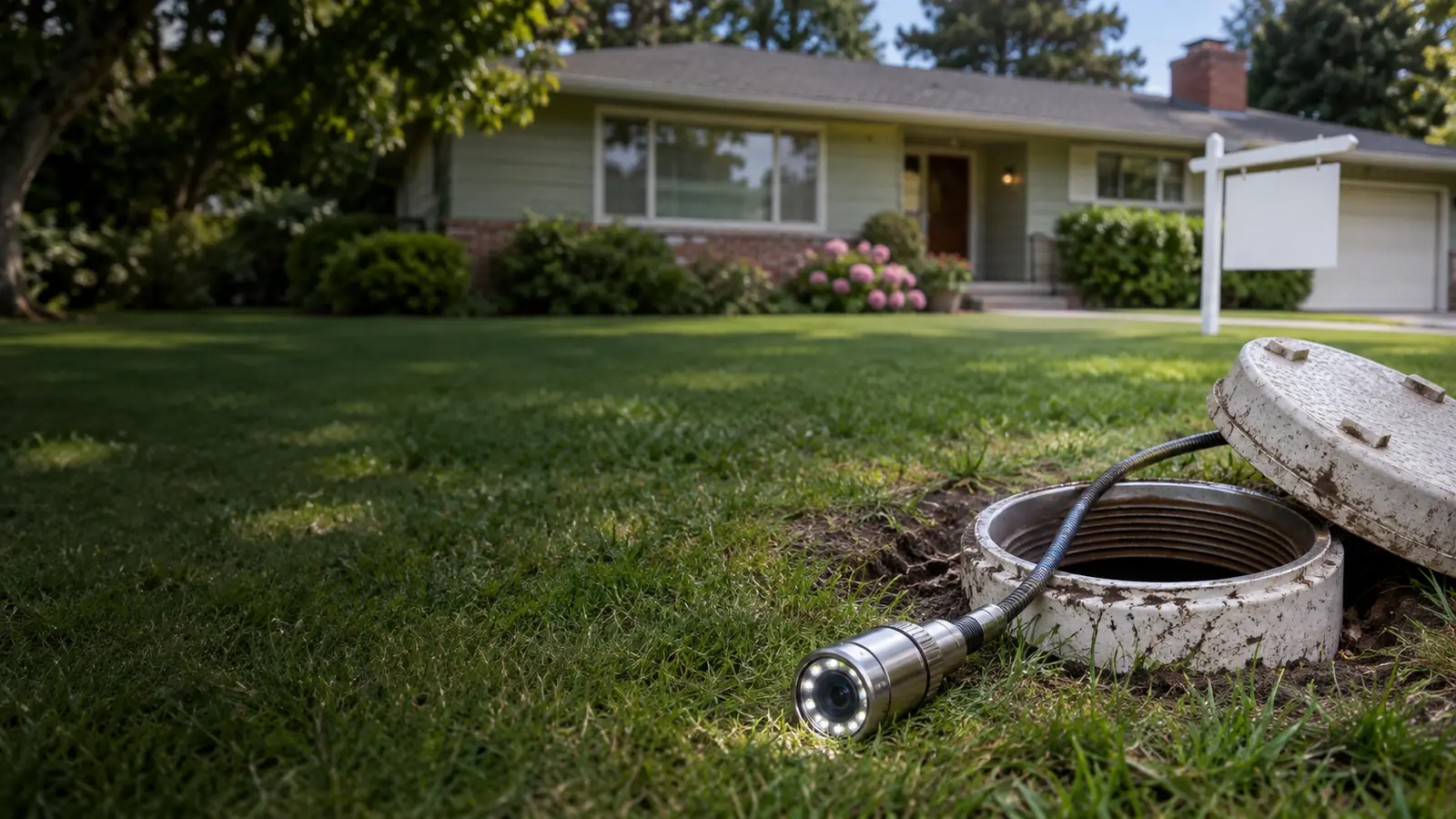
A sewer camera inspection before buying shows the condition of the sewer lateral, which standard home inspections do not cover. It finds roots, cracks, sags and old pipe so you can negotiate repairs before closing.
Why Home Inspections Miss the Sewer Line
A general home inspector runs water and checks visible plumbing, but cannot see inside the buried pipe that carries waste to the street. In the City of Los Angeles, that pipe, the sewer lateral, belongs to the property owner all the way to the street sewer main. When you buy the house, you buy its sewer line too.
What a Pre-Purchase Sewer Inspection Finds
- Pipe material: clay, cast iron, Orangeburg, ABS or PVC
- Root intrusion at joints
- Cracks, breaks and collapsed sections
- Bellies where pipe has sunk and holds waste
- Offset joints from ground movement
- Previous repairs and their condition
- Missing cleanout
Which Homes Need It Most
Every buyer benefits, but these homes carry the highest risk:
- Homes built before the 1980s, especially 1950s and 1960s tracts with clay laterals.
- Homes with large trees between the house and the street.
- Homes with a history of drain cleaning or backups in the disclosures.
- Homes that have been vacant, where problems may not have shown yet.
- Homes in areas with earthquake ground movement.
When to Schedule the Inspection
Schedule the sewer inspection early in your inspection contingency period, at the same time as the general home inspection. That leaves time to get repair quotes and negotiate before the contingency ends. Ask the seller's agent for access to the cleanout and confirm the water will be on.
How to Use the Results in Negotiation
If the inspection finds problems, get a written repair quote with options. Buyers commonly ask the seller to repair the line before closing, credit the repair cost in escrow, or reduce the price. Share the video with the seller's agent; clear footage makes the conversation factual. Our sewer line cost guide explains typical repair costs.
LA Sanitation Rebates
LA Sanitation and Environment (LASAN) offers rebates to eligible City of Los Angeles property owners for sewer lateral video inspection and repair while funds last. Eligibility depends on ownership and the city sewer service charge, so buyers usually qualify after closing. Check current terms with LASAN.
What You Receive
- The full inspection video
- A written summary of pipe material and each defect with its distance from the access point
- Ground markings of problem spots on request
- Repair options with written prices
Questions to Ask the Seller
- Has the sewer line ever been cleaned, repaired or replaced?
- Are there invoices or video from past work?
- Have there been backups, and where did they appear?
- Where is the cleanout?
- Have trees near the line been removed or planted recently?
How to Read the Inspection Video
| What you see | Severity |
|---|---|
| Smooth pipe, clean joints | Good condition |
| Light roots or scale | Maintenance item |
| Standing water (belly) | Repair to plan |
| Offset joints, cracks | Repair to negotiate |
| Collapsed or deformed pipe | Major repair before or right after closing |
Inspection Cost vs Repair Risk
A sewer camera inspection costs a small fraction of a sewer repair. Sewer line replacement averages several thousand dollars nationally, and Los Angeles projects often cost more. Finding a problem during escrow lets you negotiate, while finding it after closing leaves the full cost with you. See our sewer line cost guide.
Why Granada Hills Buyers Should Not Skip It
Granada Hills has many homes from the 1950s and 1960s with original clay sewer laterals, long setbacks from the street and mature trees in the front yard. Those three facts together make root intrusion and shifted joints common. The 1994 Northridge earthquake caused concentrated ground deformation in parts of Granada Hills and nearby Mission Hills, according to the U.S. Geological Survey, adding to the stress on buried pipes. A camera inspection is the only way to see the line before you own it.
What Happens If You Find a Problem After Closing
Once escrow closes, the sewer lateral is yours, including the section under the sidewalk and street. Sellers are generally expected to disclose problems they know about, but many owners simply have no idea what their line looks like. Inspecting during escrow keeps your options open: you can negotiate a repair, a credit or a price change, or walk away within your contingency period if the cost is too high.
Inspections for Condos and Townhomes
Condominium and townhome sewer lines are often shared and maintained by the association. Ask the association for its sewer maintenance records and any camera reports before buying, and find out which lines the unit owner is responsible for. Shared laterals in older complexes can carry the same root and joint problems as single-family homes, with costs spread through association dues or special assessments.
When to Call a Plumber
If this guide matches what you see at home, our licensed plumbers can inspect it and give you a written price. Call (747) 285-3582 to book a plumbing inspection.
Related Questions
How long does a pre-purchase sewer inspection take?
About one hour for most homes, including reviewing the footage.
Can sellers get a sewer inspection before listing?
Yes. A pre-listing inspection lets sellers repair or disclose problems before buyers find them.
What if the house has no cleanout?
The plumber can access the line through a toilet or roof vent, or recommend installing a cleanout.
Can I use the inspection video later?
Yes. Keep it with your home records; it documents the line's condition at purchase.
Does the seller have to fix the sewer line?
Not automatically. Repairs, credits or price changes are negotiated between buyer and seller during escrow.
Is a sewer inspection worth it on a newer home?
Often, yes. Construction debris, poor slope or root intrusion can affect newer lines, and the video documents condition at purchase.