
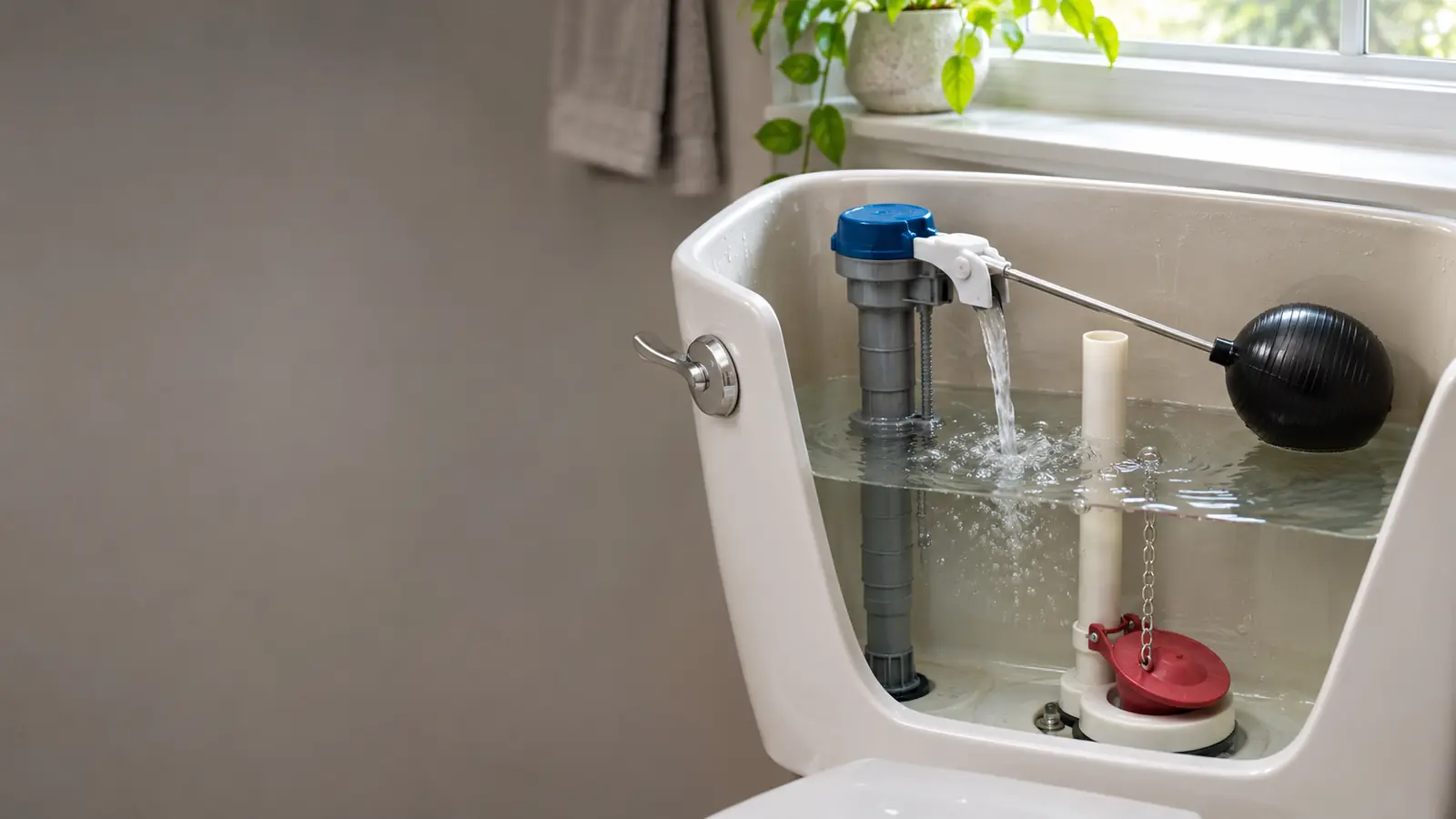
A running toilet is usually caused by a worn flapper, a misadjusted float or fill valve, or a tangled chain. A leaky toilet can waste up to 200 gallons of water a day, so fix it quickly.
How Much Water Does a Running Toilet Waste?
A running toilet can waste up to 200 gallons of water a day, a figure the EPA's WaterSense program uses in its leak-prevention materials. Even a silent leak, where water slips from the tank into the bowl, adds up on an LADWP bill over a billing cycle.
Common Causes
| Cause | What you notice | Fix |
|---|---|---|
| Worn or warped flapper | Tank refills on its own every few minutes | Replace the flapper |
| Chain too short or tangled | Flapper does not seal after flushing | Adjust the chain slack |
| Float set too high | Water runs into the overflow tube | Lower the float |
| Failing fill valve | Hissing or water that will not shut off | Replace the fill valve |
| Scale on the flush valve seat | New flapper still leaks | Clean the seat or replace the flush valve |
| Cracked overflow tube | Constant flow into the bowl | Replace the flush valve |
The Dye Test for Silent Leaks
- Remove the tank lid.
- Add a few drops of food coloring or a dye tablet to the tank water.
- Wait 15 minutes without flushing.
- Check the bowl. Colored water means the flapper or flush valve is leaking.
- Flush afterward so the dye does not stain the bowl.
How to Replace a Toilet Flapper
- Close the shut-off valve behind the toilet.
- Flush to empty the tank.
- Unhook the old flapper from the overflow tube ears and the chain.
- Take it to the store to match the size and style.
- Install the new flapper and set the chain with slight slack.
- Open the valve, let the tank fill and test for leaks.
Why Hard Water Makes Toilets Run
San Fernando Valley water leaves mineral scale on flappers, valve seats and fill valve parts. Scale stops rubber from sealing and makes fill valves stick. If a new flapper still leaks, scale on the flush valve seat is a likely cause. A water softener slows the buildup.
When to Repair vs Replace the Toilet
Most running toilets need only a new flapper or fill valve. Replace the toilet when the tank or bowl is cracked, parts are no longer available, it clogs often, or it is an older model that uses far more water than California's current 1.28 gallons-per-flush limit. Our toilet and fixture repair service handles both.
How to Replace a Fill Valve
- Close the shut-off valve and flush to empty the tank.
- Sponge out the remaining water.
- Disconnect the supply line under the tank.
- Unscrew the lock nut and lift out the old fill valve.
- Install the new valve, set its height to the instructions and tighten the nut.
- Reconnect the supply, open the valve and adjust the water level.
Toilet Tank Parts Explained
| Part | What it does |
|---|---|
| Flapper | Seals the flush valve and lifts to release water |
| Fill valve | Refills the tank after each flush |
| Float | Tells the fill valve when to stop |
| Overflow tube | Sends excess water to the bowl |
| Flush handle and chain | Lift the flapper |
Avoid In-Tank Cleaning Tablets
Chlorine and chemical tablets that sit in the tank can wear out rubber flappers and seals faster. Use cleaners in the bowl instead.
Running Toilets and Your Water Bill
A toilet that runs or refills on its own can raise a water bill noticeably over a billing cycle, and because many leaks are silent, the first sign is often the bill itself. If your LADWP bill jumps without a change in use, do the dye test on every toilet before looking for bigger leaks. Toilets are one of the most common sources of household water waste, and most fixes cost little in parts.
Signs It Is Time for a New Toilet
Consider replacing the toilet when it needs repeated repairs, clogs often, rocks on the floor, has a cracked tank or bowl, or was made before modern low-flow standards. A new high-efficiency toilet uses less water per flush and fewer repairs.
Why Some Toilets Run After Every Flush
A toilet that runs for a long time after each flush, then stops, often has a fill valve set too high or a float rubbing on the tank. Adjust the float so the water stops about an inch below the top of the overflow tube. If the fill valve still runs, scale or wear inside it is the likely cause, and replacing it is a quick fix.
When to Call a Plumber
If this guide matches what you see at home, our licensed plumbers can inspect it and give you a written price. Call (747) 285-3582 to book a plumbing inspection.
Related Questions
Why does my toilet run for a few seconds every so often?
That is a phantom flush: water leaking slowly from tank to bowl until the fill valve tops it up. A new flapper usually fixes it.
Is a running toilet an emergency?
No, unless it is overflowing. Close the valve behind the toilet and schedule a repair.
How long do toilet flappers last?
It varies with water quality and cleaners. Hard water and chlorine tablets in the tank shorten flapper life.
Can I replace a flapper myself?
Yes. It is one of the simplest plumbing repairs and needs no tools in most toilets.
Why does my toilet hiss?
A hissing toilet usually has a fill valve that will not shut off fully, often from wear or scale.
Can a running toilet damage the toilet?
Constant running wears the fill valve and flapper faster, and leaking water can stain the bowl, but it rarely damages the porcelain.
Do dual-flush toilets run too?
Yes. Dual-flush toilets use a different flush valve seal that can wear or collect debris, causing similar leaks.