
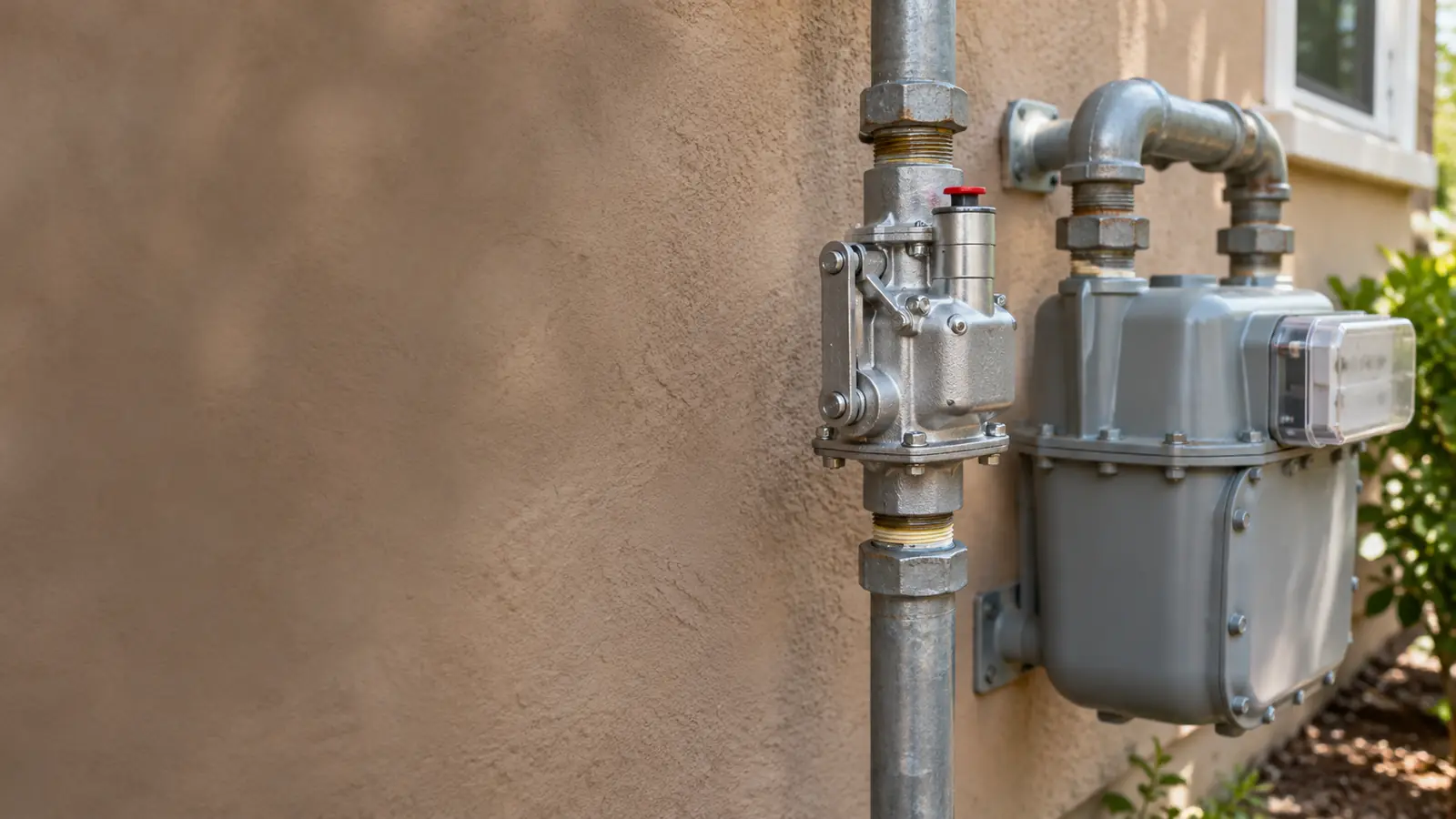
A seismic gas shut-off valve closes your gas supply automatically during strong earthquake shaking. In the City of Los Angeles, one is required in certain cases, including some alterations and property sales.
How a Seismic Gas Shut-Off Valve Works
A seismic gas shut-off valve is installed on your gas line just after the meter. Inside is a small ball or weight resting on a seat. Strong shaking knocks it off its seat, the valve closes and gas stops flowing to the home. Gas stays off until someone resets the valve by hand, which prevents gas from feeding a fire through broken lines after an earthquake.
Seismic Valves vs Excess Flow Valves
| Valve | What triggers it | Where it goes |
|---|---|---|
| Seismic gas shut-off valve | Earthquake shaking | On the house line after the meter |
| Excess flow shut-off valve | A sudden surge in gas flow, such as from a broken line | After the meter or at individual appliances |
A seismic valve closes from shaking even if no line breaks. An excess flow valve closes only when gas flow jumps, so it responds to breaks from any cause.
When Los Angeles Requires One
The City of Los Angeles regulates these valves under Los Angeles Municipal Code Section 94.1217. A LADBS information bulletin states that a building containing fuel gas piping requires an excess flow or seismic gas shut-off valve when a permit is issued to alter, repair or add to it, or when it is sold, under the conditions the code sets. Commonly cited triggers include new construction, alterations or additions valued over $10,000 and certain property sales.
Requirements and exceptions change, so confirm the current rules for your project with LADBS or your plumber before a sale or remodel. Cities outside Los Angeles set their own rules.
Why Granada Hills Homeowners Install Them
Granada Hills saw gas fires after the 1994 Northridge earthquake, including a ruptured gas main on Balboa Boulevard that burned nearby homes. A seismic valve cannot prevent a street main from breaking, but it stops gas flowing into broken lines inside your property, especially when no one is home to shut off the meter.
Installation Basics
- The plumber checks the meter set and gas line size.
- A permit is pulled where required.
- The valve is mounted level and secure on the house side of the meter, as the manufacturer specifies.
- The system is tested for leaks and appliances are relit.
- The installation is inspected.
Use a valve certified for use in California and installed by a licensed contractor, so it passes inspection and works when needed.
What to Do After the Valve Closes
- Check for a gas smell or hissing. If present, leave and call SoCalGas from a safe place.
- If there is no sign of a leak, inspect gas lines and connectors for damage.
- Reset the valve following the manufacturer's instructions.
- Relight pilot lights only if you are qualified, or call SoCalGas or a technician.
A valve can close from strong shaking or a hard bump. Mount it where cars, carts and tools cannot strike it.
Condominiums and Multi-Unit Buildings
Los Angeles rules address individual units as well as whole buildings. Under LAMC Section 94.1217, alterations or additions to an individual condominium unit, and the sale of an individual unit, can require a seismic or excess flow valve for the gas piping serving that unit. Owners and associations should confirm with LADBS how the rule applies to their building.
Choosing a Valve
- Choose a valve certified for use in California and approved by the local building department
- Match the valve size to your gas line and meter
- Prefer a model with a visible open or closed indicator
- Ask about the manufacturer's warranty
Maintenance
A required valve must be maintained for the life of the building. Keep it clear of stored items and landscaping, check that it reads open, and protect it from impacts. Replace a damaged valve with an approved model.
Seismic Valves and Home Sales in Los Angeles
If you are selling a home in the City of Los Angeles, check early whether your property needs a seismic or excess flow valve, because the requirement can surface during escrow when time is short. Installation is usually quick, but it needs the right valve, a permit where required and an inspection. Installing it before listing removes one item from the buyer's repair requests.
Do Seismic Valves Prevent All Earthquake Fires?
No. A seismic valve stops gas flowing into your home's piping after strong shaking, but it cannot stop a fire from other causes, such as electrical damage or a broken street main. Combine it with strapped water heaters, flexible connectors and working smoke and carbon monoxide alarms.
When to Call a Plumber
If this guide matches what you see at home, our licensed plumbers can inspect it and give you a written price. Call (747) 285-3582 to book a plumbing inspection.
Related Questions
Does a seismic valve shut off gas in small earthquakes?
Valves are designed to close at strong shaking, not every tremor. A hard knock to the valve can trip it too.
Can I reset a seismic gas valve myself?
Most can be reset by the homeowner using the manufacturer's steps after confirming there is no leak. Relighting pilots may need a technician.
Do I still need a gas wrench with a seismic valve?
Yes. Keep a wrench in a known spot near the meter for leaks unrelated to earthquakes. SoCalGas advises not storing it on the meter or piping.
Who installs a seismic gas valve?
A licensed plumber installs it on the customer side of the meter, with a permit where required.
Can a seismic valve be installed on a rental property?
Yes. Landlords can install valves on rental properties, and Los Angeles rules can require them in certain cases.